Pages

Monday, 22 August 2016

Beer Head

I've been visiting Beer Head twice a week at least for the last three or four weeks hoping to see signs of autumn migration.  Well I have been seeing some signs, but only very very small ones!  Late July and early August can see big numbers of Willow Warblers passing through, but not this year. Probably not helped by the clear skies and light winds that we've seen during this period - it usually takes cloud or a cold wind to drop any numbers - but I am worried they've not had a good breeding season.

Apart from the odd (and I mean odd, just one or two) Willow Warbler, it took until the 15th August before I saw any numbers worthy of a notebook entry. A Tree Pipit over east, eight Whitethroat, two Willow Warbler and a Wheatear grounded were noted on this date.

A Wheatear looking autumnal


These few birds gave me the encouragement I needed to get up here with my mist nets at the next available opportunity. So I did a few days later, but was a little late and having trudged out to my ringing site and being struck by how there were no migrants about at all, I just turned around and came back home! 

A veil of cloud and almost no wind on 18th tempted me up there again, and this time I actually stayed put and set up some nets!  A few hours with two nets gave me 15 birds of 5 species, including a control. They were:

6 Swallow (1 adult)
2 Robin
1 Dunnock
5 Willow Warbler (2 ads, 3 1st yrs)
1 Chiffchaff (a control, ring number HLV777)

Young Willow Warblers are just so yellow!

Chiffchaff HLV777 looking really scruffy in head moult


Usually I only catch young Swallows in the mist nets up here, so on catching an adult I thought I'd do some comparisons.  Adult Swallow (age code 4) on left, juvenile Swallow (age code 3) on the right...


So although I have had an enjoyable couple of hours of ringing, really it is still very quiet for passerine migration. Let's hope as we come towards the end of the month things pick up....


Birdfair

Back in 2003 when I was 17, Dad took me to my first Birdfair - The Birdfair at Rutland Water.  I remember an interesting day with several marquees and a few famous faces, but it was a much smaller event than it is today. Funnily enough it is the birds I remember the most!  In the north arm I life ticked Great White Egret, with an Osprey flying around over our heads there. From another hide we saw a juvenile Black Tern and Tree Sparrows were feeding on the feeders by the Visitors Centre.

13 years later, on Saturday just gone I was thrilled to be given the opportunity thanks to Nikon to attend once again, and it was great to return the favour to my Dad and take him back too! It was a long day, leaving Seaton at 5am and returning home at 21:30, but boy was it worth it!  


It was so nice seeing friends old and new, in particular some familiar faces from Spurn Bird Observatory - a place I owe so much too.  At the Nikon Stand, well you remember my little jaunt to Slovenia, it was nice to see the first results of this...


"The Film" will be released online on 1st September after a bit more tweaking - I really hope to share it here when it's out.

And guess what birds we saw? An Osprey, Great White Egret (three in fact, viewable from the Nikon stand), Black Tern (a moulting adult at the Egleton Reserve) and Tree Sparrows (on the feeders at Egleton).  Déjà vu!

I have a couple more blog posts in the pipeline, including my first bird ringing on Beer Head of the autumn, and some (failed) sea watching combined with horrific dipping. Stay tuned...

Tuesday, 16 August 2016

Beer and Beavers

Yesterday after a nice meal out with the team I spent the summer surveying the birds of Dartmoor with, local birder and Beaver guru Chris took us up the River Otter prior to dusk hoping for some Beaver action. These animals have been in the news several times so am sure you all know about their presence, well done DWT with all the excellent work you have done here.

Despite quite a crowd waiting, just after 20:00 the adult female Beaver named Patricia made an appearance and remained in view for about ten minutes...


Then twenty minutes later  we were lucky to also see one of the wild born kits too, which also showed for roughly ten minutes. Here's a couple of videos, the first showing Patricia...


And this one of the kit...


They really are fantastic animals to watch, and it is so good to see them living here in complete harmony with the local environment.  Many thanks Chris!

Friday, 12 August 2016

More Yellow-legged Gulls

Yesterday late morning Black Hole Marsh was very enticing with 14+ each of Ringed Plover and Dunlin, 29 Blackwits and smaller numbers of the other usual species. I did look over them once or twice, but the main reason I was here was for the Tower Hide.  Twenty minutes earlier from Coronation Corner I could see a juv Yellow-legged Gull in with the flock of large gulls right in front of the hide.

For a good while I couldn't find it which was annoying, but a glance at a break away group of six juvenile large gulls further up river showed it was still here...


Pleasingly it soon had a bit of a fly around...


And then dropped in closer, albeit it briefly...


The left hand bird, just look at the size of that bill compared with the three on the right, and the overall head shape.


This morning, after deciding to abort a ringing session before it had even started, an early morning look along the Estuary revealed another Yellow-legged Gull. And I have to say it was one of the smartest ones I've ever seen, a huge beast that was well into its moult to first-winter plumage. It was so obvious it stood out like a fully kitted out clown waving and shouting "free cream cakes here"...


Sadly the sun light hadn't made it on the Estuary before it flew off south west, so I couldn't better my pics in the dull light, but it was nice to get a flight shot...


It was interesting seeing these two birds within two days as it really highlights the variation in, not just Yellow-legged Gulls, but all juvenile/immature large gulls. This is one of the main reasons why I find gulling so enjoyable, it's a never ending learning curve...


Monday, 8 August 2016

Aren't Juvenile Waders Great!

I was watching this nice little flock of Black-tailed Godwits feeding along the Estuary this morning...


When they were joined by this beautiful fresh juvenile...


Just look at that! A gorgeous gingery work of art. 

Sometimes it's the simple things in life...

Wednesday, 3 August 2016

Least Sandpiper

What an incredible start to August on Black Hole Marsh!  This exquisite adult Least Sandpiper delighted many by still being present this morning, a first for the patch...


And a (very) short video...


This appears to be roughly the 51st record of Least Sandpiper in the UK, and the sixth (or maybe fifth?) for Devon (the two Lundy records seem very similar and close together, but are listed as two separate records?).  The most recent of these records was a bird at Thurlestone Marsh in Aug/Sep 2005, prior to that you have to go back to 1966!

So that's why Mr Bailey Junior was so happy this morning...

Monday, 1 August 2016

Black Hole Marsh

Black Hole Marsh was much the same over this mornings high tide, if anything there were slightly fewer birds than the weekend. Hopefully though this rain will drop a few more bits within the next couple of days...

5 Teal
1 Water Rail (juv)
7 Lapwing
12 Black-tailed Godwit
2 Ringed Plover (ad and juv)
4 Little Ringed Plover (juvs)
43 Dunlin
1 Wood Sandpiper
5 Common Sandpiper
1 Snipe
2 Mediterranean Gull (juv and first-summer)

Little Ringed Plover at 06:20

Little Ringed Plover at 7am - a bit more light can make all the difference!

Thursday, 28 July 2016

Cheat Birding

I was making my way back from town yesterday when I decided to pop into Black Hole Marsh for the late morning high tide. It was such a last minute decision that I wasn't even equipped with my telescope, but still thought it was worth a quick look...

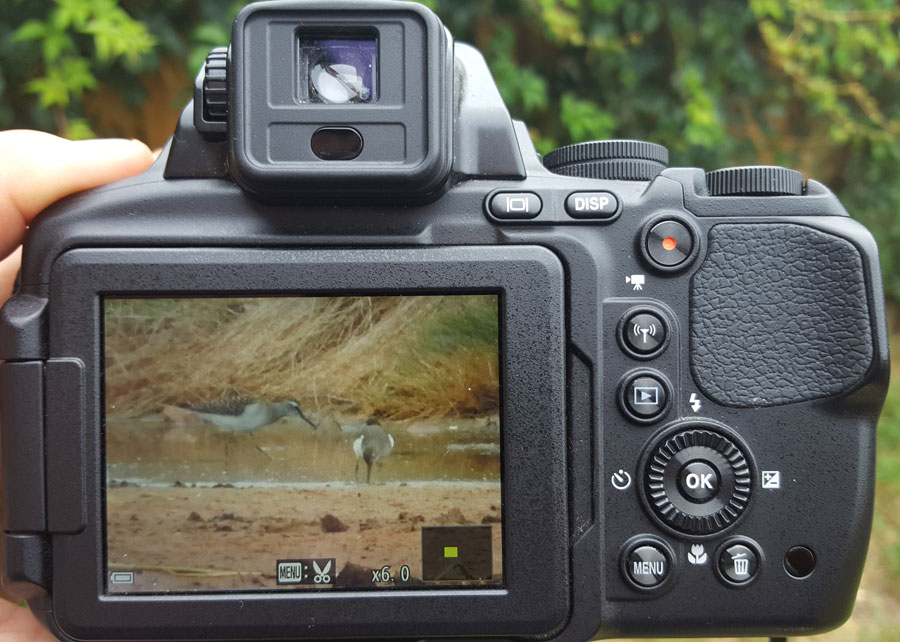
From the Island Hide all seemed quiet, and no one already in there had seen anything of note. I soon picked up an elegant looking wader in the far corner of the marsh though, feeding near a Common Sandpiper.  Despite the distance I was pretty sure it was the Wood Sandpiper found the previous day by Sue Smith, and realised I had a way to confirm this. Over to the Nikon P900...


Yes, despite the ridiculous distant, zooming right up and taking a couple of shots was more than enough to see that this was indeed our first Wood Sand of the autumn!

I promise this laziness will not be a regular thing...

Monday, 25 July 2016

Juvenile Yellow-legged Gull

The annual arrival of juvenile Yellow-legged Gulls in to the UK was later than usual this year, and I have been even further behind.  For a couple of weeks small numbers have been seen along the south coast of Devon, but for me whenever I've had chance to look at gull flocks I've drawn a blank.  Thankfully though I broke my duck in style this morning with an absolute brute of a bird on Seaton Beach at 8am...

Just look at that!  Such a bruiser it looked almost Great Black-backed Gull-like at times!

An especially big billed individual!

Right in the middle of the shot, look how pale headed it looked compared to the juv Herring Gulls to the right.

Sadly I managed to completely fluff the flight shot, but it still shows the tail well - neat black trailing edge to a mostly white tail.


And hopefully these pointers will help the non-larid lovers among my readers to understand why this is identifiable as a juvenile Yellow-legged Gull...

Yellow-legged Gull (YLG) to the left, Herring Gull (HG) to the right.

1 - Bill size and shape is vastly different, especially with this brute of a YLG!

2 - YLG shows a much squarer head with a much paler ground colour which gives them a masked appearance around the eye. Be careful as you do get paler HG, which is why I can't stress enough how important it is to use more than one feature to ID a juv YLG.

3 - The scapulars, coverts and mantle feathers have narrower paler edges on YLG with HG showing more notching too. I often find the centers of these feathers browner in YLG and blacker in HG.

4 - Both species have mostly solidly dark tertials, but HG show more pale notching and barring around the edges, whereas YLG tend to have neat and narrow pale edges with fewer or no notches.

Although there are more differences (especially in flight, look at that flight shot again), I'd say these four points along with overall size (YLG being larger and longer winged than HG with longer paler legs) are the most striking features when I come across a settled juvenile YLG.

I hope you have found this useful and good luck in finding your own :-)

Wednesday, 20 July 2016

Black Hole Marsh and Med Gulls

Went down to the wetlands this morning for the high tide, and I'm pleased I did because Black Hole Marsh was packed full of birds.

Looking out from the Tower Hide

'ROL'

'ROL' with two friends

Over the following hour the marsh showed;

2 Teal
1 Water Rail
6 Lapwing
1 Ringed Plover
5 Little Ringed Plover (1 ad and 4 juvs)
9 Dunlin
11 Black-tailed Godwit
20+ Redshank (incl. a good numbers of juvs)
1 Green Sandpiper
11 Common Sandpiper
250+ Black-headed Gull

I really love late July down here, often the hides are quiet as the scarce species haven't arrived yet, but the marsh can still be packed full of birds. So much noise and it's always brilliant to see migrating waders taking a rest to refuel before they continue with their journey.

A species that wasn't on Black Hole this morning was Mediterranean Gull, despite the large gathering of Black-heads.  Unlike any other time of year, in late summer we always seem to get far more Med Gulls offshore than in the river valley.  Ian Mc had 14 (one juv) off the sea front at about 08:30 today, I went there about 45 minutes later and had a lone juv, a lone second-summer and then a group of eight (incl. 3 juvs), all making their way west. I'm willing to bet they were all different birds, making a morning total of 24 which is pretty good for us.

Lastly it was great to have a meet up with our new Reserves Manager whilst in the hide. In my opinion this is a very exciting announcement as James was here when the Axe Wetlands were first born, but now he has the top job...

James Chubb back in his natural habitat


Tuesday, 19 July 2016

Slovenia

What an incredible few days!

A few weeks ago and completely out of the blue Nikon approached me and asked if I would be interested in featuring in a short film about birding. I managed to sort some last minute time off and was pleased to be able to agree.  I had it in my head it would be shot somewhere in the UK, maybe Norfolk or up a mountain in Scotland or Wales? So when the director said he had chosen Slovenia as the location I was somewhat surprised!! Soon into the trip though it was clear why he had chosen this magnificent country...


I was only out there for three nights, and it really was all work and very little play. Each day we were filming for most of the morning, broke for lunch at about 11:30ish, and then travelled to a new location before filming again until dark.  For the first day and a half we were in the Julian Alps, the Triglav National Park. We started off at the foot of the mountains on the east side, near to where we spent the Wednesday night, a cabin called Mihov Dom.

The Gorenjska region of the Triglav National Park.


Mid afternoon on the Thursday we were filming at what is apparently the cleanest river in Europe, the Dragonja, at Trenta.

It was so hot here! Amazingly clear water though.


Then by Thursday evening were right on top at the fantastic Mangart, which is the third highest mountain in Slovenia, right on the border with Italy. The views were absolutely outstanding and the drive up was simply incredible.


Amazingly from here you could even see the Adriatic Sea, in the above photo it is in the dip between mountains in the middle of the photo. With a bit of zoom you can see it a little better...


That night we stayed in the breathtaking Mangart Pass Hut which is at about 2000m, situated just below the Mangart Saddle. 


Friday morning it was more mountain filming at Mangart, before heading a long way south to a place called Lake Cerknica and nearby forests.

A forest somewhere in Slovenia!

Lake Cerknica. This was just one of a large network of water bodies.


And this is where we remained until I was picked up and taken back to the airport at 13:30 on Saturday. What a whistle stop tour of a magnificent country, I really look forward to coming back and exploring more of it.

Although it was pretty much all work, in between takes and during breaks of course I kept my eyes and ears open, and managed to see the following...

Golden Eagle - one by Dragonja River and another at Mangart.
White Stork -  a few seen in the lowlands.
Great White Egret - 10+ around Lake Cerknica.
Wood Sandpiper - 2+ at Lake Cerknica.
Little Ringed Plover - 2+ at Lake Cerknica.
Black Woodpecker - two feeding at a tree stump alongside a track through a forest on east edge of Triglav National Park.
Grey-headed Woodpecker - one flying between two areas of woodland in south of country, also heard several times.
Alpine Swift - a couple seen on the way up and at Mangart.
Crag Martin - one seen from car on way up to Mangart.
Ashy-headed Wagtail - a pair (male in song) at Lake Cerknica.
Alpine Accentor - one at Mangart.
Water Pipit - at least six at Mangart, looked like a family party.
Crested Tit - common in lowland woodlands.
Black Redstart - seemed common in lowlands, but also a pair at Mangart.
Nightingale - a fledged young showed well by Lake Cerknica.
Sardinian Warbler- a female feeding young by Lake Cerknica.
Hooded Crow - everywhere!
Alpine Chough- most numerous bird at Mangart, saw at least 15.
Red-backed Shrike - seemed quite common in lowlands.
Great Grey Shrike - one seen whilst traveling in lowlands.
Serin - a couple of singles seen in lowlands.
Snowfinch - at least four, including a male in song flight, at Mangart.


Out of all these species, two were especially special for me.  The Black Woodpeckers were amazing, and I was so so lucky to see them - they had chosen to feed on a tree stump situated right next to the forest track we were driving along! And then there were the Snowfinch. I can remember being struck by this species the first time I opened up the Collins book, I just love birds with black and white on them. So to have a male song flighting around my head, and a really close fly past by a family group, was just incredible - and in stunning (but cold, it was 3c!) scenery too. 

The only birdie photos I managed to take were these...

Alpine Chough - adult and baby.

Great White Egret

White Stork


From this trip not only have I learnt that Slovenia is in amazingly beautiful and dynamic country, but also that the people are wonderfully kind and nothing is ever too much trouble.  You really need to get used to all the welcome drinks you are given, some are really strong!  Oddly though, the Slovenians apparently haven't discovered butter yet.  Every meal we sat down for (three breakfasts, three lunches and three dinners) there were mountains of bread on the table, but not one knob of butter!  Also, they don't seem to bother with locks on toilet/bathroom doors, whether in a private house or a public bar/restaurant/lodge...

And as for the film, once it is finalised and edited I hope to post it up here. 

Friday, 8 July 2016

The Next Chapter...

A completely serious post for a change.

Being given the opportunity of serving as Devon County Recorder has always been a real privilege for me. We live in a county containing some top top birders, so to have been nominated and welcomed to this role at the age of 24 was a real honour, and will always remain a life highlight.  

Since I started this ‘job’ in Sept 2010 - taking over from Mike Langman (I had big boots to fill!) - I have seen an incredible amount of change within Devon Birds. Being at the heart of it I have seen first hand the hard work put in by volunteers on a daily basis for this change to happen, and it is quite simply astonishing. The whole society is run by countless unpaid hours of work and these people deserve so much praise, more so because they never ask for any rewards or even look for credit.  Although I served under three Chairmen, most of my time at Devon Birds was with George Harris at the top. He did a fantastic job steering the society to where it is today, and the mind boggles at how many hours he had to put in for this to happen as successfully as it did.

Although I coped well with the workload for most of my time, towards the end of my term as County Recorder my work life, and just life, has put too much pressure on me to carry out this voluntary role to its full potential. This is why I have decided to leave having served my five year term.  To whoever is lucky enough to take on the County Recorder baton, I will be on hand if any advice is needed, and will work hard to ensure the hand over is a smooth one.

And lastly, just a few thank yous. Obviously Julia Harris gets the biggest one from me. If every County Recorder had a Julia then all county bird societies would have a much easier job compiling their county bird databases – words can’t really convey what I owe her. Also I would like to thank all the individuals I have worked alongside within the Devon Records Committee. Although sometimes they do have tough decisions to make, they are always made fairly and only after a lot of careful thought and discussion. The meetings I will miss a lot, but I'm please to say I have made some great friends through them.

Thank you everyone, see you around birding and don’t forget get your records and descriptions in as soon as!  

So it's now time for the next chapter in my life, and boy it's an exciting one! Watch this space...