Pages

Showing posts with label dartmoor. Show all posts

Friday, 10 July 2020

A Buzzing Surprise

It's over a week late, but I just have to blog about this...

Tuesday 30th June was my last day of Furlough, and feeling like I needed to make the most of it I bundled the family into the car and drove to Dartmoor.  This was despite the absolutely grim weather - I just had an urge to go!

Our picnic near Warren House Inn was something to be forgotten about.  Wind and rain meant we had to stay in the car, and the fog ensured the usual stunning views were not in view at all.  With spirits low I suggested Fernworthy Reservoir as out next port of call, somewhere that has always been a favourite of mine, being the source of so many happy birding memories.

Arriving in the carpark it was nice to see the weather was a little less less grim here.  Drizzle and poor visibility yes, but you could still see the far side of the Res and we had managed to escape the wind.

The weather and views reminded me of being sat on the edge of a Scottish loch


Within about three seconds of stepping out of the car I proved this was indeed an excellent choice of destination.  Before I'd even had chance to shut my car door, in nearby scrub I could hear...

'Tchay - tchay - tchay'.

Willow Tit!  Although a species I haven't heard for about fifteen years, there was no mistaking that scolding-buzzy chur!

I can't lie, I instantly abandoned the family and legged it towards the call!  It took me a few minutes to track it down, but there, feeding on the inside of young willow tree (how apt!) was a super gorgeous and extremely cute young Willow Tit!  It still had that 'fluffy-headed' appearance of a youngster, and seemed to have not fully grown its tail.  WHAT A TREAT. 

After about five minutes of some super views, paired with frequent calling (which sometimes included a high pitch 'pi' in front on the buzzy notes), it flew out the back of the willow and away from the path.  For the next few minutes I could hear its calls getting quieter and quieter.

Was I annoyed I didn't have my Nikon P900 with me?  Well no actually.  It's so easy to fluff up a fast moving small bird in a densely leaved tree, and I have wasted many minutes doing this (especially warblers!).  But because I didn't even have my camera with me, I just watched it.   As it was becoming more distant I suddenly thought I should get some sort of 'proof', so I reached for my phone.  Turn your volume to the max and mute all other sounds, then you may just about hear it two seconds into this video clip...


There's a few reasons why this was SO exciting for me...

We don't get Willow Tits in East Devon, and having not been anywhere where Willow Tits occur for so long, this was literally my first Willow Tit since I was in my late teens!  

Fernworthy was actually the site of my first ever Willow Tit.  I remember birding here with Dad in the late 90's after being told they had been seen in the vicinity.  Having never seen one before I just didn't know what to expect with my first Willow Tit, as I'd read on so many occasions how difficult they were to separate from Marsh Tit.  But I will never forget walking around the far south west corner of the Res and clapping eyes on a black-cap tit that basically shocked me at how obviously Willow it was!  It's thick and almost hunched in neck along with a broad pale wing bar were just so striking it had a completely different look to any Marsh Tit I'd ever seen.  Even the way it moved felt different to a Marsh to me.

Although Fernworthy was the site of my first, I also knew this was basically a historic site for this species.  So to see a recently fledged young bird here is a significant find. An honour to find.

And finally... well they are just such a rare bird!  Estimates are they've suffered a 79% UK decline since the late 80's, and in Devon their distribution appears to be similarly shrinking with the north west corner of the county (Roadford and Tamer Lakes and Hartland Forest) being their last strong hold.  Although how many pairs are actually still there I don't know, does anyone?  Am sure there's still the odd pair tucked away on Dartmoor, as this little one basically proves, but there can't be many left. Am pretty sure they no longer occur in Cornwall or Dorset, and maybe even Somerset?

And as if this little one wasn't enough, the whole time we were there Crossbills were 'chupping' away. At least thirty surrounded us in the trees near the carpark and dam, and at one point there was an ferocious explosion of Crossbill calls emanating from the far bank - sounded like an absolute monster flock taking flight! Was nice to see a singing Tree Pipit too along with some fresh lemon yellow young Willow Warblers.  And I couldn't not appreciate the lovely Heath Spotted Orchids in flower...


If you ever needed proof Dartmoor isn't just a fair weather destination, take this blog post as it.

Thursday, 25 June 2020

High Brown Fritillaries

Spent this scorcher of a day on Dartmoor with the family, enjoying a very relaxed afternoon around Venford Reservoir. It's not an area of Dartmoor I have explored much before, although have no idea why because it's a truly stunning part of the moor...

Looking north from the north east corner of Venford Res

Venford Brook


Whilst we were here Fritillaries were forever frustrating me by zipping around without stopping for breath. When I did eventually get a good look at one I was shocked to see it was a High Brown Fritillary - one of the rarest butterflies in the UK! 

High Brown Fritillary


The three Frits I saw settled were all High Brown, and the other 7-10 insects that I only saw in flight looked similar in every way, although am well aware of the Dark Green pitfall.  Am sure it's a known site, but a real delight to stumble upon without prior knowledge that's for sure.  

I think this one simply had to land because it was in such a state!  The wing shape was more akin to a Comma...

Sadly a bit distant, and that blade of bloody grass!


I also saw several Small Heaths and Large Skippers, along with singles of Brimstone and Green Hairstreak.  Bird-wise, Crossbills stole the show with almost constant calling and frequent small flocks flying over.  Hardly surprising though considering the movement that is underway at the moment - I bet Dartmoor is absolutely bursting at the seams with them!

Back to Fritillaries, and on Tuesday we visited the other Moor that Devon boasts, Exmoor.  I didn't see many birds to talk about, except for a lovely family of Garden Warblers, but it was great to see numerous Dark Green Fritillaries (too quick for photos) and my first Silver-washed Fritillary of the year...

Silver-washed Fritillary


Well that was a Fritillary-heavy post, which can't ever be a bad thing! I do have more content stacked up ready to blog, but it's late now so will have to wait for another day. Check back soon...


Thursday, 4 June 2020

Yarner Wood

I want to start this blog post with a bit of a disclaimer and some (hopefully) common sense nature-watching advice.  Even during my short visit I saw some questionable behaviour, so just wanted to stress...

It is VITAL that anyone watching any birds nest, particularly those of scarce species, does so at a suitable distance and in a way that the birds are unaffected by your presence.  Listen for alarm calls from adults and juveniles and watch the adults behaviour. If there's any change in that, like for example adults flying around with beaks full of food but not actually going to the nest, then get the hell out of there!  It's a crucial time when young are in the nest, the adults need to get food down their gullets in such high volume that any delay could be costly, plus there's always a danger that a frequently disturbed nest could be completely abandoned.  

On the other side of the coin though, and despite my big red text, there does seem to be something of a taboo about watching birds nests.  With good field craft it shouldn't be a problem and can prove so educational, engaging and rewarding.  Be aware of the law though, stay well away from any Schedule 1 species (even though I think the list is in need of a bit of an update!).

Right, let's crack on with the post...

At the end of May I spent a few hours one morning at Yarner Wood for a change of scenery.  I am as devoted to my patch as any patch birder, but still sometimes think it's good to have some 'away time'. Especially in a spring that for much of we were locked down for!

Such a species-rich woodland


As a coastal patch birder, a place where spring and autumn migration is such a major factor in the birding calendar, it's easy to associate species with the 'wrong' habitat.  Redstarts and Pied Flies for example, well for me that's April, or mid Aug - early Oct on Beer Head, in thickets of scrub on the edge of open ground.  But of course that isn't their true habitat at all.  Taking the time to see these species in their breeding sites actually serves as a good lesson, this is the reason they make the epic journey here from South Africa and why we sometimes are lucky enough to see them on the south coast.  

I don't think I've actually explained the above paragraph very well, but hopefully you kind of get my thinking?  Seeing them in their true home, in the middle of the breeding season frantically feeding young, actually completes the bigger picture.  I just need to go and seem them in their wintering quarters now! Jess? :-)

Anyway back to this visit and Yarner Wood was absolutely superb.  I have been there many times but never have I seen it so busy with birds.  I think in the past I have timed visits to coincide with a good amount of song, whereas during this visit there was very little in song.  That was clearly because everything looked so busy feeding young, and due to the late May date I should imagine many of the young were only a day or so off fledging. Big young need big amounts of food!  I have also heard it is a good Pied Fly season, with just under 100 nest boxes occupied by this species here. Redstarts and Spot Flies seemed numerous and active too but I don't know the numbers of these.

Hopefully these few picture will set the scene better than any of my blurb...

Male Pied Flycatcher - I saw at least 16 Pied Flies during my quick loop walk

This female Pied Fly bringing a Large Yellow Underwing back for breakfast

A super male Redstart - saw five Redstarts in total (3m, 2f)

A lady Redstart with bling!


I knew it was going to be a good visit even before I'd entered the wood.  From the entrance gate itself opposite the upper Trendlebere Down car park, there were two Pied and a Spotted Flycatcher, a Garden Warbler, then about ten paces inside the gate a male Redstart. Magic!

A great start!


So that's 16+ Pied Flycatcher, five Redstart plus four Spotted Flies, five Willow Warbler, one Garden Warbler, heaps of Siskin, two Lesser Redpoll, and...

The other reason for my visit at this time of year was to catch up with a rapidly declining species that I just don't see enough of.  The only reason I am posting this is because I know they have now fledged and disturbance to the nest can no longer be an issue.

Although early spring is often quoted as the time of year to find this species, it's this week for me when the young are noisily advertising their presence. To be honest, how any nests of this species are successful is a miracle to me - the young literally don't stop calling and if I can find them then any potential predator can too! 

I must stress, in keeping with my opening paragraphs, the hour I spent watching these adult Lesser-spotted Woodpeckers coming and going, I did so from a considerable distance (as can be seen by the amount of foliage in the pics between me and the nest hole!).  The only time I heard them alarm call, when the male also gave a bout of song, was when a Great-spotted Woodpecker landed on the top of the nesting tree. My heart was in my mouth as Great-spotted Woodpeckers will happily raid a nest, but gladly this one flew off without causing any damage.  

You can see from the quality of my pics that my aim was to watch and enjoy. Photos were almost an after-thought...

The male - or some of it anyway!

The female and one of it's offspring just


Such a privilege to find and be able to study this rare species.  These were my first Lesser Spots for so many years and what a way to see them.

The adults really do not hang around the nest site, they were in and out in less than ten seconds on most occasions, with a nest visit roughly every four minutes.  Interestingly the male visited far more often than the female.  On the occasions that both parents arrived at similar times, one would wait out on a nearby tree for the other to feed the young before moving in themselves.  In typical Lesser Spot fashion I loved the way they appeared and disappeared, so ghostly-like. Out of nowhere there'd be one on the nesting tree, and after a quick visit to the nest hole it would fly back into the wood and simply melt into the canopy.

What a fantastic morning and I hope you've enjoyed me reliving it :-)


Tuesday, 21 May 2019

Dartmoor Double Dose

Thrilled to have spent a couple of days on Dartmoor within the last week. Reaffirming my feelings that this magical place is one of my favourite places on earth...

So picturesque


Last Wednesday was a very special day, as I took Dad up to the Moor for the first time since he suffered a stroke last October.  Thanks to the time I spent working on Moor Than Meets The Eye I feel like I know the Moor pretty well now, but I have to be honest and say I was really scratching my head thinking about where to find accessible birds. By accessible I mean birds easily viewable from a road or by a level and smooth path/track...there really isn't much of Dartmoor that can be described as being level and smooth! I soon learnt there was very little information online about where we could go, so hopefully this blog post will provide others in need with the relevant information.

I asked a few friends for their thoughts, and spoke to some land owners requesting a bit of extra access - and am delighted to say they were all super helpful and very obliging.  Basically it was only for permission to drive down a couple of private drives, but that increased level of access certainly helped make the day the success it was.

Looking down Headland Warren Valley to Challacombe Farm


We started the day by driving slowly down the valley of Headland Warren where Dad's first Wheatear of the year were easy, there were several pairs showing close to the road...

Male Wheatear
A different male Wheatear, this pair were clearly busy feeding young


 And right on cue, Dad spotted this right next to the car. Talk about 'easy' birding...

Cracking male Whinchat


I was a bit surprised that this proved our only Whinchat of the day, considering how densely packed in they are on the east facing slopes just across the valley from the road. The moderate and fairly cold easterly wind probably wasn't encouraging birds to sit out though, despite the blue skies.

At the base of the valley we arrived at Challacombe Farm, a site that always delivers. A good hour and a half here gave us two Cuckoo, three singing male Redstart, a couple of Lesser Redpoll, Reed Bunting, Whitethroat, Marsh Tits nesting in a wall and just plenty of birds. It's never a bad thing seeing lots of birds whatever the species, especially in this day and age.

Male Redstart
Same male Redstart
And again


A quick look in the Sousson's area gave us another singing Redstart and slightly more showy Cuckoo, along with a couple of Tree Pipits...

Distant singing Tree Pipit


After a quick stop in Postbridge and a check of the pines around the Bellever Forest car park (just a few Siskins here) we dropped down to Yarner Wood, our final destination of the day.  

First came lunch, then I managed to get Dad along the small track that runs from the top end of the car park along the back of the wet area in front of the hide.  We were told by a very helpful warden we were in the right place, and after some patience we saw two pairs of Pied Flies.  One of the males in particular showing especially well...

First-year male Pied Fly
And again
And again - what a poser!
Last one I promise! He was just so photogenic...


So there you go.  Accessible birding is possible on Dartmoor, it just needs a bit of forward thinking and planning. A truly memorable day for me, in so many ways.

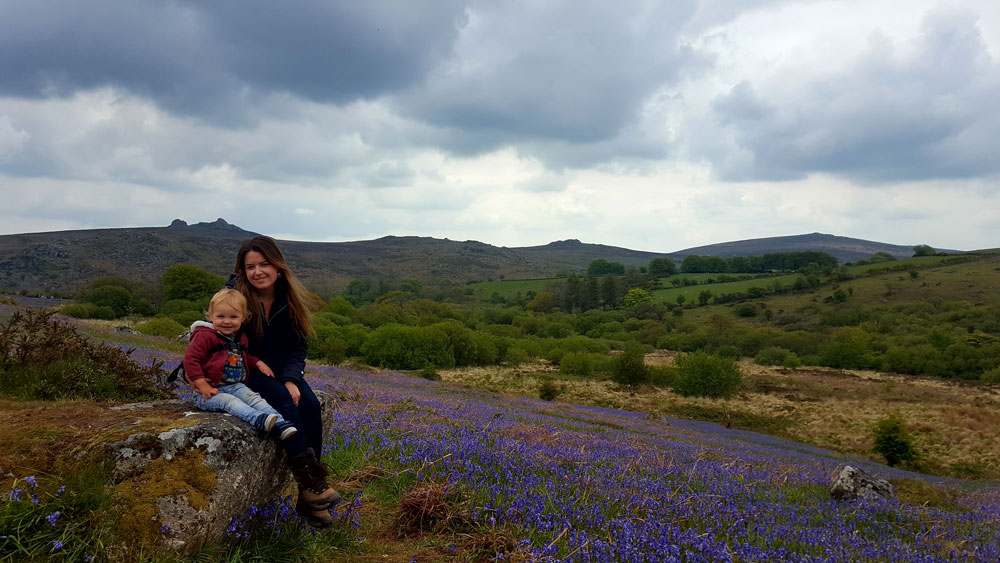
A few days on, now Saturday, and despite the cloudy skies it was a day on Dartmoor with Jess and Harry - another amazing day. Although the sun wasn't shining it was still bright and there was not a breathe of wind which is unusual. Our first stop was to Holwell Lawn near Hound Tor, a staggeringly beautiful spot especially at this time of year - and an ideal spot to snap your loved ones in...

Literally my favourite photo ever


Here there were singles of singing Garden Warbler and Cuckoo, along with a noisy recently fledged family of Stonechats.  After lunch in Widecombe we came back up the hill for my first ever visit to Emsworthy Mire, another beautiful spot...

Love the barn!


Not only was the view nice, but the soundscape matched it too.  A male Redstart was singing continuously in the trees pictured above, along with Wheatears, two Cuckoos and the amazing sound of two bubbling Curlews.

Stunning, and am already looking forward to my next visit.


Saturday, 30 March 2019

Dartmoor Day

Will post a local update in the next day or two, but in the meantime here's a few pics from a stunning family day trip to Dartmoor yesterday...


At least four Crossbills spent lunchtime with us, along with numerous Siskins, a couple of Dipper and a Wheatear.   Had one of those moments too of really appreciating a common bird. We all go nuts for spring Yellow Wagtails, especially the colourful headed varieties. But have you looked closely at at Grey Wagtail lately? Stunning...


Saturday, 4 June 2016

Catching Up...

Well I had a feeling the blog posts would start drying up, but I won't apologise because spending so much time on Dartmoor is proving an incredible experience. I have seen so many birds and I know you all already know, the scenery is absolutely stunning.  I am delighted to be part of the team that is mapping bird numbers and distributions on Dartmoor for the Moor Than Meets The Eye project (http://www.moorthanmeetstheeye.org/).

Sadly we can't always park this close to the survey areas!

A singing Grasshopper Warbler in silhouette 


And spending so much time out on the moor means we encounter more than just birds...

Adder


I do have a bit of patch bird news to tell, rewind back to 21st May and it was one of those days I was not enjoying missing!  Although not all that much was seen off the patch in the first few hours of the day, Lyme Regis and Sidmouth had seen a nice selection of skuas and a heap of passing waders.  Early afternoon though Dan at Sidmouth really upped the grippage with two Pom Skuas and a Storm Petrel - ouch.   I wasn't home until late afternoon, but immediately made a bee-line for the seafront.

I was really lucky to get down there when I did, about 40 minutes into the watch the weather completely changed. All the cloud and showers cleared through, the wind dropped off and the sea went almost flat calm.  I would have loved to have got here sooner, but I still managed a few nice highlights.  Best of all being a lovely pale phased Pomarine Skua west at 18:25. It seemed to be a full adult, with a long stiff tail but no spoon on the end.  What was best about this was five minutes earlier a pale phased Arctic Skua flew west, albeit much further out.  I am always worried we throw some Poms away here with the distance some of our skuas pass, but seeing these two flying in the same direction in such a short space of time has eased my worries somewhat, the second I picked up the Pom the flight style and wing shape were just so obvious.  

Other than these two skuas, 60 Manx Shearwater and a mixed flock of 35+ Dunlin and Sanderling were all I noted.  

And that's about it. Well except for a Red Kite east over the Donkey Sanctuary on 28th May...

Pic taken with my phone - it really was low!

Saturday, 14 May 2016

Last Week

I've not got too much to tell of last week, due to two days of illness, two mornings of superb Dartmoor surveying and only about three hours of patch birding.

I had high hopes for Monday, but all I managed to squeeze out of the patch was a Hobby west over Bridge Marsh and this brief Greylag Goose with the Mute Swan flock there...

Patch bronze

Wednesday was spent on the moor, but I did have a spare ten minutes to look along the Estuary between this and work, and wow - it showed that Wednesday was a good day!  The heavy rain, fog and light SE wind had obviously encouraged waders to move about (and ground) - I was stunned to see a single flock of 90 Dunlin and 7 Ringed Plover on the Estuary.  Numbers like this are usual in the autumn on the Estuary, but only very rarely occur in spring, there has to be the right weather conditions. Although they were just Dunlin (I was disappointed there wasn't a smart Broad-billed Sandpiper in with them yes) they were great to see due to the incredible variation between birds.  All were in summer plumage, but the mantle colours varied from almost Curlew Sand-red to winter Sanderling-grey, and everything in between!  Overall size varied too, as did bill length, so the flock probably consisted of all of the regular occurring UK races; arctica, schinzii and alpina. I just wish I took some photos.

I find May wader days so so exciting - the 'rareometer' levels are sky high and there is so much potential.  Richard P managed to capture the magic with some footage from Charmouth the same morning, he had a single flock of 70 Dunlin, 25 Sanderling and 10 Ringed Plover, and he doesn't even have a river (well not a proper one anyway!). See HERE.

The following day was a bit of a let down, it was still misty and wet but the waders were just not moving - 11 Dunlin and three Ringed Plover were all the beach had to offer.  I did see a larger flock of small waders on Colyford scrape at high tide (about 40+ birds) but THE MOST frustrating thing happened...  I decided they were definitely worth a trudge out to Colyford hide, despite the rain the possibility of something like a male Kentish Plover made it a no-brainer.... Sadly though half way across Colyford Common I flushed a Peregrine off the marsh, which proceeded to fly across the tramline and straight over the scrape.  I heard a few Ringed Plover calls and when I made it to the hide there was nothing there at all... Arse.

And that's about it.  I'll end this post with a short video from Dartmoor, one of the perks of the early mornings and miles of walking...


Saturday, 30 April 2016

Dartmoor

I've been lucky enough to spend quite a bit of time on Dartmoor over the last few weeks, and will be spending a heck of a lot more time up here over the next 11 weeks...


The weather really has been mixed, the above photos were taken on the nicest day, on other mornings we had to sit out snow and hail showers, and the first day saw a raw east wind whip up late morning.  

As expected it's been nice to see plenty of the usual Dartmoor summer birds; Cuckoos daily, Curlews, Redstarts, Whinchat, Snipe, etc. A Fieldfare on the 28th was my biggest surprise, the latest I've ever seen one in the county, but considering the temperature at dawn was -1 it was probably feeling at home...


When we are out on the moor we don't have much time to hang around, none at all really.  But when this Fox appeared in front of me I just had to stop and film it for a short while, and luckily for me it did a full on mouse-pounce...


Now back to the patch. I'm really pleased that the Hoopoe is still here today, and remained in view pretty much all day for the constant trickle of visitors, there's some stunning photos of it appearing online.  It's clearly been quite a good day today, I've not gone out birding at all but two dog walks and an eye open from my back garden has given me some nice birds. Allhallows mid morning showed ten Wheatear, two Willow Warbler and a Whitethroat. A wander around Colyford late afternoon showed a female Whinchat, and from the house this evening a female Goosander flew up river and my first Swift of the year flew south.  

Wish I had gone out birding today after all!

Sunday, 26 August 2012

A Summary Of The Last Week

Well I didn't leave you waiting quite so long for this blog post!

Jess and I have had a week off, and during the week we enjoyed some nice trips out, like...

Bath - the first time I've been here...

Stunning place!

Dartmoor...

Most of these photos were taken around Dartmeet, except for Venford Reservoir at the top

And several trips to Black Hole Marsh...

A 'must visit' for any holidayers in my opinion!

Each visit to Black Hole Marsh showed the cracking juv Spotted Redshank (stunningly depicted here), and average numbers of the more usual wader species (for example Friday showed 24 Blackwits, 17 Dunlin, six Snipe, five Green Sands and a Ringed Plover). Teal numbers increased as the week went on, with a surprise Tufted Duck also present on Friday...

A very distant and underwhelming Tuftie in the rain

A mid afternoon wander over Beer Head on Thursday is also just about worth mentioning, as singles of Yellow Wag and Whitethroat were noted. Sadly not the Wryneck I was hoping for though.

After my Hoary Footman success of Sunday night, I put the moth trap out again on Tuesday evening. When I woke up Wednesday it felt pretty chilly out, so I knew the trap wasn't going to be fully loaded - I was right! Amazingly though I managed another first for the garden - two in a week! This was a very overdue and predictable one though...


Canary-shouldered Thorn

I was back to work today, and typically Beer was almost sinking under the weight of grounded migrants this morning!