Pages

Showing posts with label pied flycatcher. Show all posts

Thursday, 4 June 2020

Yarner Wood

I want to start this blog post with a bit of a disclaimer and some (hopefully) common sense nature-watching advice.  Even during my short visit I saw some questionable behaviour, so just wanted to stress...

It is VITAL that anyone watching any birds nest, particularly those of scarce species, does so at a suitable distance and in a way that the birds are unaffected by your presence.  Listen for alarm calls from adults and juveniles and watch the adults behaviour. If there's any change in that, like for example adults flying around with beaks full of food but not actually going to the nest, then get the hell out of there!  It's a crucial time when young are in the nest, the adults need to get food down their gullets in such high volume that any delay could be costly, plus there's always a danger that a frequently disturbed nest could be completely abandoned.  

On the other side of the coin though, and despite my big red text, there does seem to be something of a taboo about watching birds nests.  With good field craft it shouldn't be a problem and can prove so educational, engaging and rewarding.  Be aware of the law though, stay well away from any Schedule 1 species (even though I think the list is in need of a bit of an update!).

Right, let's crack on with the post...

At the end of May I spent a few hours one morning at Yarner Wood for a change of scenery.  I am as devoted to my patch as any patch birder, but still sometimes think it's good to have some 'away time'. Especially in a spring that for much of we were locked down for!

Such a species-rich woodland


As a coastal patch birder, a place where spring and autumn migration is such a major factor in the birding calendar, it's easy to associate species with the 'wrong' habitat.  Redstarts and Pied Flies for example, well for me that's April, or mid Aug - early Oct on Beer Head, in thickets of scrub on the edge of open ground.  But of course that isn't their true habitat at all.  Taking the time to see these species in their breeding sites actually serves as a good lesson, this is the reason they make the epic journey here from South Africa and why we sometimes are lucky enough to see them on the south coast.  

I don't think I've actually explained the above paragraph very well, but hopefully you kind of get my thinking?  Seeing them in their true home, in the middle of the breeding season frantically feeding young, actually completes the bigger picture.  I just need to go and seem them in their wintering quarters now! Jess? :-)

Anyway back to this visit and Yarner Wood was absolutely superb.  I have been there many times but never have I seen it so busy with birds.  I think in the past I have timed visits to coincide with a good amount of song, whereas during this visit there was very little in song.  That was clearly because everything looked so busy feeding young, and due to the late May date I should imagine many of the young were only a day or so off fledging. Big young need big amounts of food!  I have also heard it is a good Pied Fly season, with just under 100 nest boxes occupied by this species here. Redstarts and Spot Flies seemed numerous and active too but I don't know the numbers of these.

Hopefully these few picture will set the scene better than any of my blurb...

Male Pied Flycatcher - I saw at least 16 Pied Flies during my quick loop walk

This female Pied Fly bringing a Large Yellow Underwing back for breakfast

A super male Redstart - saw five Redstarts in total (3m, 2f)

A lady Redstart with bling!


I knew it was going to be a good visit even before I'd entered the wood.  From the entrance gate itself opposite the upper Trendlebere Down car park, there were two Pied and a Spotted Flycatcher, a Garden Warbler, then about ten paces inside the gate a male Redstart. Magic!

A great start!


So that's 16+ Pied Flycatcher, five Redstart plus four Spotted Flies, five Willow Warbler, one Garden Warbler, heaps of Siskin, two Lesser Redpoll, and...

The other reason for my visit at this time of year was to catch up with a rapidly declining species that I just don't see enough of.  The only reason I am posting this is because I know they have now fledged and disturbance to the nest can no longer be an issue.

Although early spring is often quoted as the time of year to find this species, it's this week for me when the young are noisily advertising their presence. To be honest, how any nests of this species are successful is a miracle to me - the young literally don't stop calling and if I can find them then any potential predator can too! 

I must stress, in keeping with my opening paragraphs, the hour I spent watching these adult Lesser-spotted Woodpeckers coming and going, I did so from a considerable distance (as can be seen by the amount of foliage in the pics between me and the nest hole!).  The only time I heard them alarm call, when the male also gave a bout of song, was when a Great-spotted Woodpecker landed on the top of the nesting tree. My heart was in my mouth as Great-spotted Woodpeckers will happily raid a nest, but gladly this one flew off without causing any damage.  

You can see from the quality of my pics that my aim was to watch and enjoy. Photos were almost an after-thought...

The male - or some of it anyway!

The female and one of it's offspring just


Such a privilege to find and be able to study this rare species.  These were my first Lesser Spots for so many years and what a way to see them.

The adults really do not hang around the nest site, they were in and out in less than ten seconds on most occasions, with a nest visit roughly every four minutes.  Interestingly the male visited far more often than the female.  On the occasions that both parents arrived at similar times, one would wait out on a nearby tree for the other to feed the young before moving in themselves.  In typical Lesser Spot fashion I loved the way they appeared and disappeared, so ghostly-like. Out of nowhere there'd be one on the nesting tree, and after a quick visit to the nest hole it would fly back into the wood and simply melt into the canopy.

What a fantastic morning and I hope you've enjoyed me reliving it :-)


Tuesday, 21 May 2019

Dartmoor Double Dose

Thrilled to have spent a couple of days on Dartmoor within the last week. Reaffirming my feelings that this magical place is one of my favourite places on earth...

So picturesque


Last Wednesday was a very special day, as I took Dad up to the Moor for the first time since he suffered a stroke last October.  Thanks to the time I spent working on Moor Than Meets The Eye I feel like I know the Moor pretty well now, but I have to be honest and say I was really scratching my head thinking about where to find accessible birds. By accessible I mean birds easily viewable from a road or by a level and smooth path/track...there really isn't much of Dartmoor that can be described as being level and smooth! I soon learnt there was very little information online about where we could go, so hopefully this blog post will provide others in need with the relevant information.

I asked a few friends for their thoughts, and spoke to some land owners requesting a bit of extra access - and am delighted to say they were all super helpful and very obliging.  Basically it was only for permission to drive down a couple of private drives, but that increased level of access certainly helped make the day the success it was.

Looking down Headland Warren Valley to Challacombe Farm


We started the day by driving slowly down the valley of Headland Warren where Dad's first Wheatear of the year were easy, there were several pairs showing close to the road...

Male Wheatear
A different male Wheatear, this pair were clearly busy feeding young


 And right on cue, Dad spotted this right next to the car. Talk about 'easy' birding...

Cracking male Whinchat


I was a bit surprised that this proved our only Whinchat of the day, considering how densely packed in they are on the east facing slopes just across the valley from the road. The moderate and fairly cold easterly wind probably wasn't encouraging birds to sit out though, despite the blue skies.

At the base of the valley we arrived at Challacombe Farm, a site that always delivers. A good hour and a half here gave us two Cuckoo, three singing male Redstart, a couple of Lesser Redpoll, Reed Bunting, Whitethroat, Marsh Tits nesting in a wall and just plenty of birds. It's never a bad thing seeing lots of birds whatever the species, especially in this day and age.

Male Redstart
Same male Redstart
And again


A quick look in the Sousson's area gave us another singing Redstart and slightly more showy Cuckoo, along with a couple of Tree Pipits...

Distant singing Tree Pipit


After a quick stop in Postbridge and a check of the pines around the Bellever Forest car park (just a few Siskins here) we dropped down to Yarner Wood, our final destination of the day.  

First came lunch, then I managed to get Dad along the small track that runs from the top end of the car park along the back of the wet area in front of the hide.  We were told by a very helpful warden we were in the right place, and after some patience we saw two pairs of Pied Flies.  One of the males in particular showing especially well...

First-year male Pied Fly
And again
And again - what a poser!
Last one I promise! He was just so photogenic...


So there you go.  Accessible birding is possible on Dartmoor, it just needs a bit of forward thinking and planning. A truly memorable day for me, in so many ways.

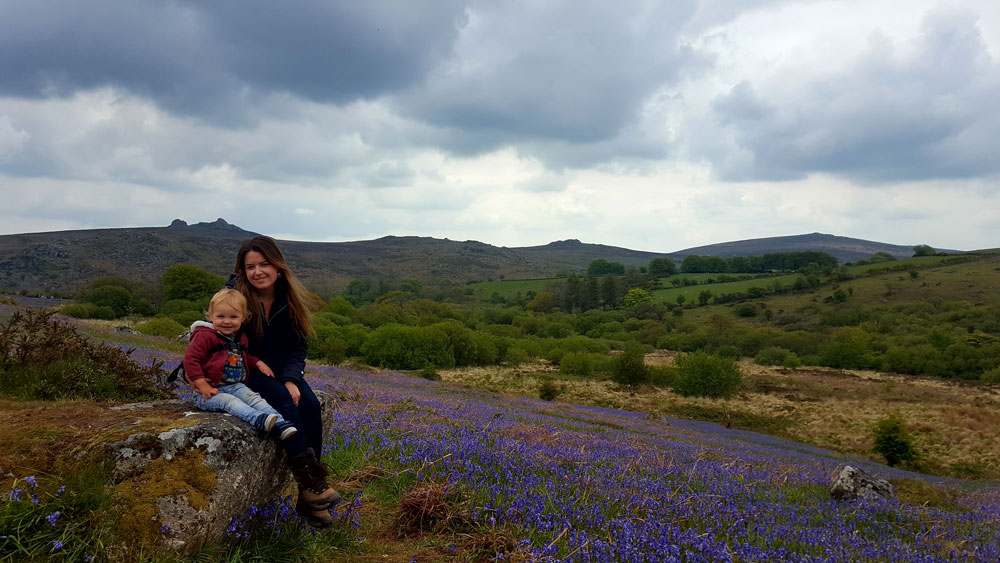
A few days on, now Saturday, and despite the cloudy skies it was a day on Dartmoor with Jess and Harry - another amazing day. Although the sun wasn't shining it was still bright and there was not a breathe of wind which is unusual. Our first stop was to Holwell Lawn near Hound Tor, a staggeringly beautiful spot especially at this time of year - and an ideal spot to snap your loved ones in...

Literally my favourite photo ever


Here there were singles of singing Garden Warbler and Cuckoo, along with a noisy recently fledged family of Stonechats.  After lunch in Widecombe we came back up the hill for my first ever visit to Emsworthy Mire, another beautiful spot...

Love the barn!


Not only was the view nice, but the soundscape matched it too.  A male Redstart was singing continuously in the trees pictured above, along with Wheatears, two Cuckoos and the amazing sound of two bubbling Curlews.

Stunning, and am already looking forward to my next visit.


Thursday, 25 August 2016

Mega Beer Head Morning

Mixed emotions from Beer Head this morning. One of my best ever early autumn falls, but I was bird ringing and managed to catch not that much at all!!  I knew it was going to be good straight away, as I was walking out to my net site in the half-light of dawn I saw a Spot Fly on a low fence with half a dozen Wheatear, and two Tree Pipits flew over calling.

The first two hours were really amazing, with birds just suddenly appearing in the bushes, but then quickly disappearing too.  The field I was ringing in was then completely invaded with Wheatears when a huge flock dropped in, but again they pretty quickly moved off west. Yellow and Grey Wags and Tree Pipits kept zipping overhead, it really was all go and so so exciting!!! At about 9am though it all went quiet. And I mean really quiet, the bushes just went bird-less. So weird how this happens...

But my one 60 foot mist net that usually catches most things I see was completely and utterly useless.  The north wind was just strong enough that birds could clearly see it as they were flying around, under and over it.  It may as well have been painted neon yellow to be honest - well it couldn't have done any worse! So so disappointing in this respect (especially as I saw the star bird of the morning 'bounce out'), but a superb few hours at the same time!

Pointless mist net!


So, forgetting about the ringing (which is what I should have done at 7am and just gone for a wander!) this is what I saw;

1 alba Wagtail
3 Grey Wagtail
30+ Yellow Wagtail (some with cattle, others over west)
15 Tree Pipit (my highest ever count for Beer Head, all overhead)
25+ Wheatear
2 Redstart (m and f)
1 Pied Flycatcher (a bit of a Beer Head mega, last seen bouncing out then flying around my mist net! Gutting)
5 Spotted Flycatcher
1 Blackcap
1 Garden Warbler
4 Whitethroat
10 Willow Warbler
5 Chiffchaff
1 Goldcrest (my first of the autumn here)

Ian Mc, Ian P and my Dad were also up Beer Head this morning, and from what they told me I reckon you could add another one or two Redstarts, a couple more Spot Flies and a load more Whitethroats to my totals.

Epic epic epic morning. Really hope we get many more like this, but it would be nice if I caught a few of them next time...

Thursday, 18 April 2013

What A Walk To Work!

Well it's about time I caught up with things, and tell all about the excitement following my last blog post.

Tuesday afternoon I headed off to work, and walked along the cycle track into Seaton. As I came down to the marshes the first bird I saw was a male Whitethroat - my first of the year! Pleased with that, I walked a little further south to the water treatment works on the edge of Seaton Marshes. There were a few Willow Warblers flitting about, but I wasn't expecting what I saw next - a male Pied Fly

Now this may not seem like much to many birders, but to us it's a big event...

The twitch!

A Pied Fly of any form at any time of year is notable for us, with autumn being the best time (although we never get more than a handful).  Spring Pied Flies are rare here, and rarer still are spring male Pied Flies.  This is only the third of this plumage I've ever seen on patch, with the other two being on Beer Head - the last four years ago. It's not just about the rarity value though - they are such stunning birds.

I thought I'd best grab a record shot of it when I first saw spotted it, in case it was to disappear...

Still looks amazing despite the awful pic!

Thankfully it did remain, and Karen got some excellent snaps of it, see HERE. Sue also got some great pics of it, along with some shots of the lovely Yellow Wag on Black Hole Marsh earlier that day, see HERE.

It wasn't just birds I saw on this walk in, but plenty of Butterflies too. I only saw Peacocks and Small Tortoiseshells, but there were lots of them...

Peacock

Today, all I've had time for was an hours sea watch from the Spot On Kiosk, where I had arranged to meet Gav at dawn.  The conditions weren't great, and I wouldn't describe it as being busy, but it was great to see a few sea birds at last. 

Best of all were three stunning Great Skuas that flew fairly close west together just after 7am. Two adults and one clearly a younger bird with a paler belly and less prominent white wing flashes.  It was also nice to see some Manx Shearwaters finally, with 16 west (two and a distant flock of c14). Other than this I saw a few distant Terns and Kittiwakes, six Common Scoter, two Red-throated Divers and a distant large Diver sp..

Tomorrow looks as though it may be good for some more grounded migrants. Fingers crossed!

Saturday, 28 August 2010

Brilliant Bank Holiday Birding

What a fantastic day - and I normally really hate bank holidays cuz people are just bloody everywhere! I started the day at Beer Head, nice and early at 6am...

Even by 06:05 I knew it was going to be good, as in the gloom I'd already seen four Tree Pipits and two Wheatears! I stayed up here until 09:20, and could have stayed much longer if Blackhole Marsh wasn't beckoning me so much!

As always, Beer Head offered superb scenery...

Look! The moon is still out!!!

And about twenty minutes in, I turned around to see this...

It's Bun! (I tried to hide but he had already seen me!)

These were my totals by the end of my three plus hours here, plus a few hopeless pics...

Redshank - one heard flying over
Great-spotted Woodpecker - two juvs, notable for beer head
Yellow Wagtail - 61 flew west, though many landed with cattle west of the look out

you can just about see six flying west...if you really squint!

alba Wagtail - 18, including at least twelve grounded
Tree Pipit - a good total of nine included (unusually) three grounded birds. Like the others, these flew off NW

A very poor photo of two of the settled Tree Pips

Meadow Pipit - two west
Wheatear - at least 48, some moving through very quickly
Whinchat - one west of the look out

Sorry, I know I really shouldn't post a photo of this quality!

Stonechat - one juvenile near the head
Garden Warbler - two (Summit and The Hollow)
Blackcap - at least eight
Whitethroat - four
Sedge Warbler - one in The Sheepwalk
Willow Warbler - 37+, in reality there were probably twice as many!
Chiffchaff - six
Pied Flycatcher - one in hedge east of Sheepwalk, showed well
Spotted Flycatcher - three
Bullfinch - one at The Summit

Am very pleased with this haul, well worth the early start! And it wasn't just birds that were plentiful at Beer Head this morning...

...this is Bun again

...now this elusive one IS a tricky ID, if the subject was in winter plumage you would see red with this view :-)

Three more distant birders - one being 'old man' Waite

At 09:20 I hot footed it to Blackhole Marsh, hoping that a certain stint had joined our Dunlin flock (this Stint in case you didn't know!). Well it hadn't, in fact nothing had - all looked very samey in the wader department to me!

I had a bit of shock though whilst kicking about in some ditches and reeds, not what I was hoping for but still much appreciated... (by the way it didn't coming out of the ditches, just flew south west over the marsh from Colyford Marsh direction)


I sent a text out saying what I'd seen, but was pleased to re-locate it a few minutes later a little to the south of me, so sent another round of texts out. If you can't work out what it is from the video, this should help...

...say what you see!

It's our first of 2010, but at least the eighth I've found on patch. Isn't it funny how a few years ago everyone was like "they are doing a Little Egret - they will be everywhere soon!" and now they've gone back to being scarce again!

The only other few bits of news I've got to tell for today is of singles of Whimbrel and Wigeon on the Estuary, and three Greenshank and 18 Teal on Colyford Marsh.

What an excellent day - bring on more like this :-)

ps it is a Cattle Egret and remained in the area all day!!