Pages

Showing posts with label wheatear. Show all posts

Saturday, 28 March 2020

Lockdown Listing Day Five

Finished the day on a bit of a bum note really, as am pretty sure I let a Cattle Egret through the net.  We have at least one in the Axe Valley at the moment, but it's not flown past whilst I've been looking and I think it's spending most the daylight hours north of us. At about 18:50 I got on to a flock of eight or so egrets ten seconds too late, just as they disappeared behind a house. On size, one right in the middle of the flock was probably the Cattle, but just not enough to confirm. 

The day started off much better, with a phone call from Phil who kindly thought of me when three Med Gulls were flying around over Tower Hide with a small flock of Black-heads.  I rushed out and despite the absolute appalling light, they were easy enough to pick out with my bins...

Awful light but an easy little flock to study

I was actually really impressed considering the conditions that the P900 was able to pick all three out...

Here's two two of them leading the flock - you can see the pale wing tips.

The third - the sun shining through the wing tips helping ID this one, but I think I can make out some slight dark tips making it a second-summer.


You'll be surprised to hear that the Black-headed Gulls were also a new one for the list, their numbers have dropped right off on the Axe over the last couple of weeks (as usual for late March). So that's 51!

52 was a nice surprise, as it was an all-time garden first!  Wheatear.  Yes, over the years I probably could have seen plenty if I'd scanned the distant fields and salt marsh for long enough during spring and autumn - I've just simply never bothered. Today I did, and for ten minutes late morning I watched one feeding in the corner of Norcombe's field. Delightful. But it's a good job they're pale and stand upright - a pipit or such like I would never have seen considering the distance.

Hopefully tomorrow's post will be titled 'Cattle Egret'...

Tuesday, 17 March 2020

Firecrest and... It's Spring!

Felt sorry for this lovely Firecrest today, found by one of my team on the ground near a tram parked up outside Seaton Station.  She took this snap on her phone, but when she subsequently went to pick it up it flew off strongly into nearby bushes.


Am pleased to report that about an hour and a half later I was watching it busily feeding in bushes alongside the track a little way north of the Station (at the back of Tesco). I've not seen one in the centre of town before!

I managed a whilst-at-work Wheatear yesterday too, on a day there had been a significant influx of this species on the south coast.  I could only spy one on Sheep's/Seaton Marshes, but he was much appreciated.  I saw/heard four Chiffchaffs yesterday too.  Spring has clearly stepped up a notch within the last couple of days, with Dad seeing a few Sand Martins and a Swallow at Black Hole Marsh mid morning today as well.

Am leading a bird watching tram this Saturday. Hopefully... More migrants please!


Tuesday, 13 August 2019

Best Job Ever?

On Sunday evening I was delighted to lead a tram of 19 (plus Allan our driver) up the Axe Valley on a Birdwatch special. 

The weather during the afternoon was overcast with some heavy downpours, and the forecast looked a bit iffy for the duration. But in reality except for a couple of spots of rain as we left Seaton Station, everything including the weather was just so kind to us.  The wind dropped to almost nothing and the rain and clouds soon cleared revealing a magical soft golden light across the valley...


The birds were just as kind to us, and I'll start with the punters favourite as always, Kingfisher.  We had four sightings of probably two birds, with one sitting in full view for several minutes which left smiles on everyone's faces.  The hunting Barn Owl that remained in view for about ten minutes was also a firm favourite, this also posed well for the tram full...

Barn Owl

On the other side of the Estuary, one of the lingering juvenile Marsh Harriers hunted over the reed beds before landing distantly in a field opposite...


For the whole journey, low-flying Swallows, House Martins, Sand Martins and (a surprisingly high number of) Swifts showed really well as they fed low on flying insects. Whilst on the subject of passerines, three Wheatears showed well around Sheep's Marsh...

Wheatear - I just love the pale-edged black primaries

What was really special for me was the variety and numbers of wading birds on show.  At the top end of the trip where we turn around by Colyford scrape, as if three Green Sandpipers, a young Turnstone, a Dunlin and 11 Ringed Plovers weren't enough - a Wood Sandpiper took off from the small pools north of the scrape and flew south, calling all the way.

Adult Ringed Plover left and juvenile Turnstone right
Green Sandpiper

Thankfully on the return journey the Wood Sandpiper showed better, unusually feeding on the Estuary with a group of Redshank...

Look at the size difference - juv Wood Sandpiper flanked by two Redshank

Black Hole Marsh showed good numbers of Black-tailed Godwits and Dunlin plus a close Greenshank, with the Estuary giving another three Greenshank, a further three Turnstone (four is a cracking good count for us!), two Whimbrel, a heap more Black-tailed Godwits and at the very least 14 Common Sandpipers.  

Next year I'm going to try and arrange a few more Birdwatch tram trips for autumn, particularly August and September.  Seeing large numbers of wildfowl during the winter is always good, but nothing quite beats the variety, quantity and almost endless possibilities that can be seen during a trip in one of these months.

Tuesday, 21 May 2019

Dartmoor Double Dose

Thrilled to have spent a couple of days on Dartmoor within the last week. Reaffirming my feelings that this magical place is one of my favourite places on earth...

So picturesque


Last Wednesday was a very special day, as I took Dad up to the Moor for the first time since he suffered a stroke last October.  Thanks to the time I spent working on Moor Than Meets The Eye I feel like I know the Moor pretty well now, but I have to be honest and say I was really scratching my head thinking about where to find accessible birds. By accessible I mean birds easily viewable from a road or by a level and smooth path/track...there really isn't much of Dartmoor that can be described as being level and smooth! I soon learnt there was very little information online about where we could go, so hopefully this blog post will provide others in need with the relevant information.

I asked a few friends for their thoughts, and spoke to some land owners requesting a bit of extra access - and am delighted to say they were all super helpful and very obliging.  Basically it was only for permission to drive down a couple of private drives, but that increased level of access certainly helped make the day the success it was.

Looking down Headland Warren Valley to Challacombe Farm


We started the day by driving slowly down the valley of Headland Warren where Dad's first Wheatear of the year were easy, there were several pairs showing close to the road...

Male Wheatear
A different male Wheatear, this pair were clearly busy feeding young


 And right on cue, Dad spotted this right next to the car. Talk about 'easy' birding...

Cracking male Whinchat


I was a bit surprised that this proved our only Whinchat of the day, considering how densely packed in they are on the east facing slopes just across the valley from the road. The moderate and fairly cold easterly wind probably wasn't encouraging birds to sit out though, despite the blue skies.

At the base of the valley we arrived at Challacombe Farm, a site that always delivers. A good hour and a half here gave us two Cuckoo, three singing male Redstart, a couple of Lesser Redpoll, Reed Bunting, Whitethroat, Marsh Tits nesting in a wall and just plenty of birds. It's never a bad thing seeing lots of birds whatever the species, especially in this day and age.

Male Redstart
Same male Redstart
And again


A quick look in the Sousson's area gave us another singing Redstart and slightly more showy Cuckoo, along with a couple of Tree Pipits...

Distant singing Tree Pipit


After a quick stop in Postbridge and a check of the pines around the Bellever Forest car park (just a few Siskins here) we dropped down to Yarner Wood, our final destination of the day.  

First came lunch, then I managed to get Dad along the small track that runs from the top end of the car park along the back of the wet area in front of the hide.  We were told by a very helpful warden we were in the right place, and after some patience we saw two pairs of Pied Flies.  One of the males in particular showing especially well...

First-year male Pied Fly
And again
And again - what a poser!
Last one I promise! He was just so photogenic...


So there you go.  Accessible birding is possible on Dartmoor, it just needs a bit of forward thinking and planning. A truly memorable day for me, in so many ways.

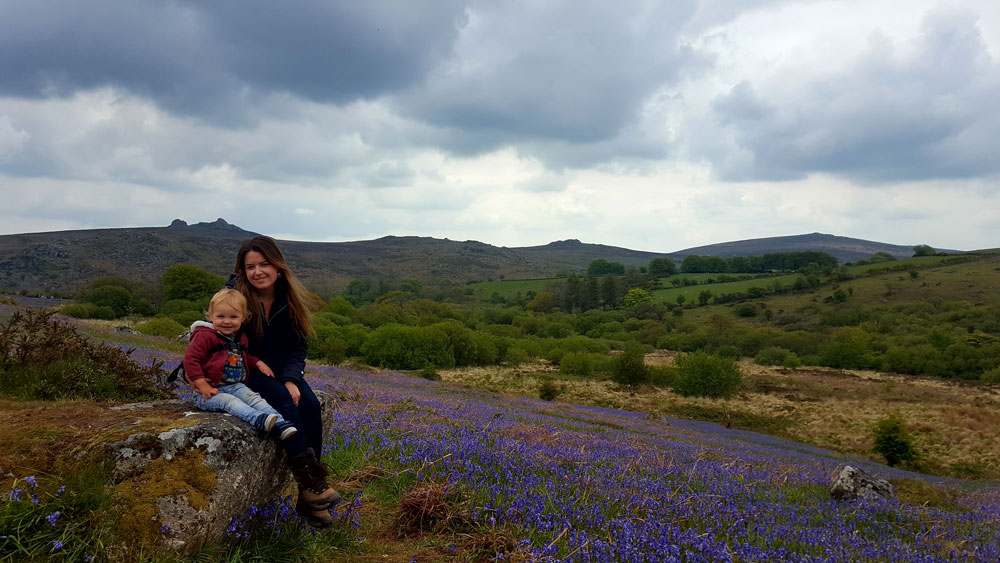
A few days on, now Saturday, and despite the cloudy skies it was a day on Dartmoor with Jess and Harry - another amazing day. Although the sun wasn't shining it was still bright and there was not a breathe of wind which is unusual. Our first stop was to Holwell Lawn near Hound Tor, a staggeringly beautiful spot especially at this time of year - and an ideal spot to snap your loved ones in...

Literally my favourite photo ever


Here there were singles of singing Garden Warbler and Cuckoo, along with a noisy recently fledged family of Stonechats.  After lunch in Widecombe we came back up the hill for my first ever visit to Emsworthy Mire, another beautiful spot...

Love the barn!


Not only was the view nice, but the soundscape matched it too.  A male Redstart was singing continuously in the trees pictured above, along with Wheatears, two Cuckoos and the amazing sound of two bubbling Curlews.

Stunning, and am already looking forward to my next visit.


Sunday, 31 March 2019

Roll on April!

Thought I best bring you all up to speed before we get into April, when it will probably all kick off on the migration front...  mind you it looks like it already has!

I was at work most of today, so missed Bun's male Redstart on Beer Head and the Osprey that flew up river mid afternoon (seems to have been several of these arrive on south coast today). A quick look around as the sun set though showed a big increase of hirundines in the valley, with 70+ Sand Martins and about five Swallows feeding over Colyford and Bridge Marsh.

Yesterday morning I enjoyed leading a tram trip along the Estuary, with six Sand Martins north, a Wheatear (my first female of the year), a Greenshank, a Dunlin and two male Shoveler the highlights...

Female Wheatear

Redshank and Greenshank (now in summer plumage)

Male Stonechat on the tram overhead!

Don't get many Wren photos so thought this was worth posting!


A couple of evenings prior to this I spent some time at our only remaining reliable Little Owl site. Great to see at least one still hanging on...

The distinctive shape of a Little Owl with a stunning orange sky backdrop


And that brings me up to date with my local bird news. April it is over to you...


Wednesday, 13 March 2019

First Wheatears

A message from Clive mid afternoon yesterday alerted me to the presence of our first two Wheatear of the year on Colyford Common. Yeah finally some spring migrants - I really do not know how we've missed out on all the early hirundine action here!  

I got to Colyford Common just before 5pm, and was greeted by the soul-lifting sight of three gorgeous male Wheatears. Here's one of them...


These early ones are always so strikingly small, dumpy and pale compared to the tall orange breasted Greenland/Iceland birds that move through from mid April. Over the course of a year I'm sure we actually see many more of the larger brighter birds than these small presumably UK breeding birds.

It was clearly a fairly good migration day yesterday, as there were also a few new Chiffchaffs dotted around the Marshes. And today Ian Mc has seen our first Sand Martin of the year, so hopefully this means the flood gates have opened... 


Wednesday, 19 September 2018

Autumn Moves On

Thought it was high time I wrote a few more words here. I am getting out now and then just not finding the time to blog about it.

I suppose the biggest news is we are well and truly in September....and don't we know it!  Meadow Pipits streaming over with fewer and fewer Tree Pipits, Yellow Wagtail vis mig replaced by Grey Wagtails and alba Wagtails, Chiffchaffs taking over from Willow Warblers as the most common phyllosc in the bushes. Autumn has well and truly moved on to the next phase, which I think of as the 'middle phase'...

Wheatear Axe Cliff - 14/8/18


The Estuary has seen a run of good birds this month, with four Spotted Redshanks together on the 1st being an amazing local sight. Osprey, Ruff, Turnstone, Wood Sandpiper have all been seen by others, with Cattle Egrets being frequently seen over the last couple of days, in fact Mark Dobinson had ten on Seaton Marshes this morning!

I was hoping to get a look at the sea this morning considering the rough weather, but only had time to muster a couple of quick scans of the gulls on the Estuary.  Proved worthwhile though as there were a couple of first-winter Yellow-legged Gulls in with them, one in the morning and one early afternoon. I didn't have a camera to hand for bird two but the first allowed some pics...

The bird on the left, nice pale headed individual

A flash of its tail


Hope to see some of the Cattle Egrets soon!  They may be getting commoner but I always enjoy seeing them.


Saturday, 24 March 2018

Spring Rain

Although not great for many things, today's light rain and grey skies looked perfect for downing some early spring migrants - and it did the trick!

I only had time for a quick look around the valley mid afternoon, but this showed a Wheatear on Seaton Beach that soon flew inland, two Sand Martin feeding over Colyford Marsh and two Sandwich Tern on the Estuary...

Dan J had several past Sidmouth this morning so there's probably been a decent arrival of these today

Spring Sarnies always look so clean and smart


It's been a great week for locally scarce wildfowl on the Axe, with Pochard, Tufted Duck and last night Billy had two pairs of Goosander drop in on Black Hole Marsh. Pity I didn't get to see any of these, but as ever thanks all for the texts.

Really excited for spring to get going properly now, and we seem to have got to late March remarkably quickly which is good news!

Wednesday, 14 March 2018

Wheatear, Weirdo Rockit and New Marsh Harrier

With rain belting down outside as I write this, it's hard to believe the view from Beer Head late yesterday morning was this...

Looking back towards Seaton and Axe Cliff


It really did feel like spring, and this was emphasised by the joyous sight of my first Wheatear of the year, a cracking male. With the clear skies it didn't stay around long, in fact it didn't even allow me to take the annual 'first Wheatear of the year' ropey record-shot!

Other birds present included a male Stonechat, and a flock of 11+ Rock Pipits with one of them looking like this...

It proved surprisingly elusive in seemingly short grass


Interestingly Bun remembers seeing (presumably) this bird here last spring, which backs up my thoughts that these were all petrosus birds, and I guess local breeders. All eleven Rock Pipits showed heavily streaked underparts and dull olive upperparts, with no hint of any pinkness anywhere to be seen. Compare with Tim Wright's photos of a recent Colyford Common littoralis HERE.

This morning I had just under an hour out at Black Hole Marsh with local wedding photographer Matt who wanted to have a play with my Nikon Monarch scope. There was plenty to look at with a drake Gadwall on Black Hole Marsh, the Greenshank on the Estuary and a Marsh Harrier showing for most of the morning .

I haven't seen our lingering Marsh Harrier for about a week now (has anyone else?) and photos of this morning's bird shows it to be a young male. Presumably with the extent of cream on the crown it can only be a first-winter, despite the amount of grey on the bird's upperwing...

Worth clicking on this pic to enlarge it so you can see the extent of grey


And yes, that's a Water Rail it's carrying...

Saturday, 9 September 2017

Osprey and Continental Black-tailed Godwit

Although we see several Ospreys each year on the Axe, both in spring and autumn, we've not had a lingering bird since mid August 2014 - this one unusually preferred fishing over the sea not the Estuary!  Before that we had two lingering birds in 2012 (though neither for very long) and the most watched was THIS colour-ringed juvenile that stayed for over a week back in September 2010.  So it was high time we enjoyed another loitering bird, and that we have...

Thanks to a tweet from Martin Bennett early Thursday afternoon (a lovely chap from the New Forest who I'd met that morning in the Island Hide) we were made away of the presence of a fishing Osprey on the Estuary. It remained all of the Friday, and was around today until late morning when it flew off south west.  I though it was leaving us earlier in the day as at 9:20am it flew west over Stafford Marsh with pace...


Gladly though it came back east to offer the gathered crowd some more fishing views...


There's nothing like an Osprey to pull in the crowds! Pity it left us so soon but hopefully we will see some more before the autumn is out.

The bushes were deadly quiet this morning, and the wading bird situation isn't much better now Black Hole is full of water. All I noted here and on Colyford Marsh were four Greenshank, two Green Sandpipers and a couple of Ringed Plovers.  The highlight for me this morning was without doubt one of the 90+ Black-tailed Godwits that are currently on the Axe.  Among a small flock of Black-tailed Godwits feeding on Colyford Common I was delighted to notice a larger bodied, billed and legged bird, a Continental limosa Black-tailed Godwit (as apposed to Icelandic islandica race which are the norm for the Axe).....

Limosa Black-tailed Godwit (front bird)


I have got several more pics of this beast, but am going to save them for another post within the next couple of days which will be about all things Blackwit.

Since my last post, the only other sightings I have to add are of a drake Gadwall that I've seen on the Borrow Pit twice, and good numbers of migrants around the Wetlands on Thursday morning which included singles of Wheatear, Whitethroat, Lesser Whitethroat and Willow Warbler, six Yellow Wagtail, 15 Blackcap and 20 Chiffchaff.

Colyford Common Wheatear


I have missed a few birds since my last post, mostly thanks to work. Tim White reported two Knot from the Tower Hide on Friday, and I was annoyed to miss a juvenile Little Stint found by Phil on Thursday evening which sadly didn't stay the night.  The most annoying thing about missing the Stint was that I really wanted to give it a good grilling as Phil reported that night, that it was a particularly long-billed individual. Hope Phil doesn't mind me sticking one of his record shots of it up here...

Little Stint (c) Phil Abbott


As you can see, quite a long-billed bird. But nothing else suggested it was anything other than a Little Stint.

Be sure to check back here soon for that Black-tailed Godwit post, which who knows may even prove educational!?

Wednesday, 23 August 2017

Black Hole Update

Morning visits to Black Hole Marsh today and yesterday have shown the following; 

47 Little Egret
1 Cattle Egret
12 Teal
14 Oystercatcher 
20 Ringed Plover
c50 Dunlin
c50 Black-tailed Godwit
5 Greenshank
8 Common Sandpiper
4 Green Sandpiper
1 Mediterranean Gull
4 Wheatear
20+ Yellow Wagtail
10 Willow Warbler

This morning's Wheatears were my first of the autumn, simply because I haven't managed to get up to Axe Cliff/Beer Head much in the last few weeks. There had clearly been something of a small fall this morning as some of the bushes and reeds were hopping with Willows and Chiffs, especially around Stafford Marsh.  In local terms it was an impressive count of Little Egrets early yesterday morning near Tower Hide, suggesting they've enjoyed a good breeding season.

Although tundra Ringed Plovers are probably very common migrants, among yesterday's (most distant) Ringed Plovers was probably the best tundrae example I've ever seen here...

The middle bird, a compact Ringed Plover with a strikingly dark mantle and crown


At the Birdfair I learnt a lot more about the fantastic Nikon P900, so am going to really try and get to grips with its various different settings and features. Sure should be fun...

Yesterday's sunset on the lower Axe Estuary, looking towards Seaton

Monday, 17 April 2017

Wheatears and a Whinchat

Early morning yomps around the Marshes have been very quiet over the past couple of days, very quiet indeed. Both early wake ups have been somewhat saved by sea watches afterwards, although neither produced any year ticks. 

Yesterday morning 45 minutes of looking over a flat calm sea gave (west unless stated); 

1 Great Crested Grebe (flew in from miles out and landed on the sea - so should have been a Red-necked!)
1 Shelduck 
4 Common Scoter (east)
4 Whimbrel
1 Knot

And an hour this morning gave (west unless stated); 

3 Great Northern Diver (my first of the spring - one in summer plumage)
10 Common Scoter (east)
18 Sandwich Tern (including a lovely close fishing flock of 11)
1 Common Sandpiper
1 Kingfisher (flew west about 20m offshore - a weird sight!)
1 Wheatear (flew in off)

Portland have had a stormingly good day today for migrants, which you'd expect considering the cloudy weather and date. But most places here have been quiet, except for Colyford Common which was hopping with birds!  Thanks to a text from Dad I was pleased to enjoy our first Whinchat of the spring and 16 Wheatear mid afternoon...

A distant but very attractive male Whinchat!


The Wheatears showed such an amazing variety of plumages and sizes, in particular the males. There were small dark ones just like the birds we see in March, and other really pale and absolute monster Greenland fellas. Some of these have such restricted colour on their front that they almost look like Eastern Black-eared Wheatears. 'Wheatear of the day' for me was the bird in the bottom left of this pic...


Some of the females were clearly Greenland-types too, as they looked large and leggy...


The few other interesting bits and bobs from today included a Green Sandpiper on a pool near Boshill Cross, four Whimbrel on Colyford Marsh and at least three new singing male Reed Warblers in. I did see/hear the odd Willow Warbler this afternoon, but nowhere near enough to claim a fall.  It was nice to finally see all seven Cattle Egrets together, on the Estuary early this morning...