Pages

Showing posts with label redstart. Show all posts

Thursday, 4 June 2020

Yarner Wood

I want to start this blog post with a bit of a disclaimer and some (hopefully) common sense nature-watching advice.  Even during my short visit I saw some questionable behaviour, so just wanted to stress...

It is VITAL that anyone watching any birds nest, particularly those of scarce species, does so at a suitable distance and in a way that the birds are unaffected by your presence.  Listen for alarm calls from adults and juveniles and watch the adults behaviour. If there's any change in that, like for example adults flying around with beaks full of food but not actually going to the nest, then get the hell out of there!  It's a crucial time when young are in the nest, the adults need to get food down their gullets in such high volume that any delay could be costly, plus there's always a danger that a frequently disturbed nest could be completely abandoned.  

On the other side of the coin though, and despite my big red text, there does seem to be something of a taboo about watching birds nests.  With good field craft it shouldn't be a problem and can prove so educational, engaging and rewarding.  Be aware of the law though, stay well away from any Schedule 1 species (even though I think the list is in need of a bit of an update!).

Right, let's crack on with the post...

At the end of May I spent a few hours one morning at Yarner Wood for a change of scenery.  I am as devoted to my patch as any patch birder, but still sometimes think it's good to have some 'away time'. Especially in a spring that for much of we were locked down for!

Such a species-rich woodland


As a coastal patch birder, a place where spring and autumn migration is such a major factor in the birding calendar, it's easy to associate species with the 'wrong' habitat.  Redstarts and Pied Flies for example, well for me that's April, or mid Aug - early Oct on Beer Head, in thickets of scrub on the edge of open ground.  But of course that isn't their true habitat at all.  Taking the time to see these species in their breeding sites actually serves as a good lesson, this is the reason they make the epic journey here from South Africa and why we sometimes are lucky enough to see them on the south coast.  

I don't think I've actually explained the above paragraph very well, but hopefully you kind of get my thinking?  Seeing them in their true home, in the middle of the breeding season frantically feeding young, actually completes the bigger picture.  I just need to go and seem them in their wintering quarters now! Jess? :-)

Anyway back to this visit and Yarner Wood was absolutely superb.  I have been there many times but never have I seen it so busy with birds.  I think in the past I have timed visits to coincide with a good amount of song, whereas during this visit there was very little in song.  That was clearly because everything looked so busy feeding young, and due to the late May date I should imagine many of the young were only a day or so off fledging. Big young need big amounts of food!  I have also heard it is a good Pied Fly season, with just under 100 nest boxes occupied by this species here. Redstarts and Spot Flies seemed numerous and active too but I don't know the numbers of these.

Hopefully these few picture will set the scene better than any of my blurb...

Male Pied Flycatcher - I saw at least 16 Pied Flies during my quick loop walk

This female Pied Fly bringing a Large Yellow Underwing back for breakfast

A super male Redstart - saw five Redstarts in total (3m, 2f)

A lady Redstart with bling!


I knew it was going to be a good visit even before I'd entered the wood.  From the entrance gate itself opposite the upper Trendlebere Down car park, there were two Pied and a Spotted Flycatcher, a Garden Warbler, then about ten paces inside the gate a male Redstart. Magic!

A great start!


So that's 16+ Pied Flycatcher, five Redstart plus four Spotted Flies, five Willow Warbler, one Garden Warbler, heaps of Siskin, two Lesser Redpoll, and...

The other reason for my visit at this time of year was to catch up with a rapidly declining species that I just don't see enough of.  The only reason I am posting this is because I know they have now fledged and disturbance to the nest can no longer be an issue.

Although early spring is often quoted as the time of year to find this species, it's this week for me when the young are noisily advertising their presence. To be honest, how any nests of this species are successful is a miracle to me - the young literally don't stop calling and if I can find them then any potential predator can too! 

I must stress, in keeping with my opening paragraphs, the hour I spent watching these adult Lesser-spotted Woodpeckers coming and going, I did so from a considerable distance (as can be seen by the amount of foliage in the pics between me and the nest hole!).  The only time I heard them alarm call, when the male also gave a bout of song, was when a Great-spotted Woodpecker landed on the top of the nesting tree. My heart was in my mouth as Great-spotted Woodpeckers will happily raid a nest, but gladly this one flew off without causing any damage.  

You can see from the quality of my pics that my aim was to watch and enjoy. Photos were almost an after-thought...

The male - or some of it anyway!

The female and one of it's offspring just


Such a privilege to find and be able to study this rare species.  These were my first Lesser Spots for so many years and what a way to see them.

The adults really do not hang around the nest site, they were in and out in less than ten seconds on most occasions, with a nest visit roughly every four minutes.  Interestingly the male visited far more often than the female.  On the occasions that both parents arrived at similar times, one would wait out on a nearby tree for the other to feed the young before moving in themselves.  In typical Lesser Spot fashion I loved the way they appeared and disappeared, so ghostly-like. Out of nowhere there'd be one on the nesting tree, and after a quick visit to the nest hole it would fly back into the wood and simply melt into the canopy.

What a fantastic morning and I hope you've enjoyed me reliving it :-)


Friday, 10 April 2020

Redstart and Spoonbill

A screeching Jay has been the only addition to the house lockdown list since my last post, but our daily family walks have come up with the goods both today and yesterday.

Yesterday I was delighted to see that flash of red that you always hope to see in the spring - Common Redstart.  This was on Stafford Marsh in the middle of the afternoon, a young male...

Wasn't sure if I was going to see one this spring so thrilled!


Also my first Reed Warbler of the year singing quietly along with a drake Shoveler on Black Hole Marsh.

Today we took a different route to the wetlands through Colyford, which gave me my first three singing Willow Warblers of the year.  Shortly after we arrived at Stafford Marsh a quick scan of the sky revealed the surprisingly shape of a Spoonbill!  It dropped on to Black Hole Marsh just long enough for me to grab this dreadful photo with my phone...

An adult too - sorry again for the awful photo!


For the rest of the time it was around it remained flighty, and am not sure it's still here as both Phil and Ian M watched it gain height and appear to depart.  

Was nice to see a Red Kite fly low north up the river too whilst here, possibly making up one of seven that were seen together just north of Axminster about half an hour later.

Tuesday, 21 May 2019

Dartmoor Double Dose

Thrilled to have spent a couple of days on Dartmoor within the last week. Reaffirming my feelings that this magical place is one of my favourite places on earth...

So picturesque


Last Wednesday was a very special day, as I took Dad up to the Moor for the first time since he suffered a stroke last October.  Thanks to the time I spent working on Moor Than Meets The Eye I feel like I know the Moor pretty well now, but I have to be honest and say I was really scratching my head thinking about where to find accessible birds. By accessible I mean birds easily viewable from a road or by a level and smooth path/track...there really isn't much of Dartmoor that can be described as being level and smooth! I soon learnt there was very little information online about where we could go, so hopefully this blog post will provide others in need with the relevant information.

I asked a few friends for their thoughts, and spoke to some land owners requesting a bit of extra access - and am delighted to say they were all super helpful and very obliging.  Basically it was only for permission to drive down a couple of private drives, but that increased level of access certainly helped make the day the success it was.

Looking down Headland Warren Valley to Challacombe Farm


We started the day by driving slowly down the valley of Headland Warren where Dad's first Wheatear of the year were easy, there were several pairs showing close to the road...

Male Wheatear
A different male Wheatear, this pair were clearly busy feeding young


 And right on cue, Dad spotted this right next to the car. Talk about 'easy' birding...

Cracking male Whinchat


I was a bit surprised that this proved our only Whinchat of the day, considering how densely packed in they are on the east facing slopes just across the valley from the road. The moderate and fairly cold easterly wind probably wasn't encouraging birds to sit out though, despite the blue skies.

At the base of the valley we arrived at Challacombe Farm, a site that always delivers. A good hour and a half here gave us two Cuckoo, three singing male Redstart, a couple of Lesser Redpoll, Reed Bunting, Whitethroat, Marsh Tits nesting in a wall and just plenty of birds. It's never a bad thing seeing lots of birds whatever the species, especially in this day and age.

Male Redstart
Same male Redstart
And again


A quick look in the Sousson's area gave us another singing Redstart and slightly more showy Cuckoo, along with a couple of Tree Pipits...

Distant singing Tree Pipit


After a quick stop in Postbridge and a check of the pines around the Bellever Forest car park (just a few Siskins here) we dropped down to Yarner Wood, our final destination of the day.  

First came lunch, then I managed to get Dad along the small track that runs from the top end of the car park along the back of the wet area in front of the hide.  We were told by a very helpful warden we were in the right place, and after some patience we saw two pairs of Pied Flies.  One of the males in particular showing especially well...

First-year male Pied Fly
And again
And again - what a poser!
Last one I promise! He was just so photogenic...


So there you go.  Accessible birding is possible on Dartmoor, it just needs a bit of forward thinking and planning. A truly memorable day for me, in so many ways.

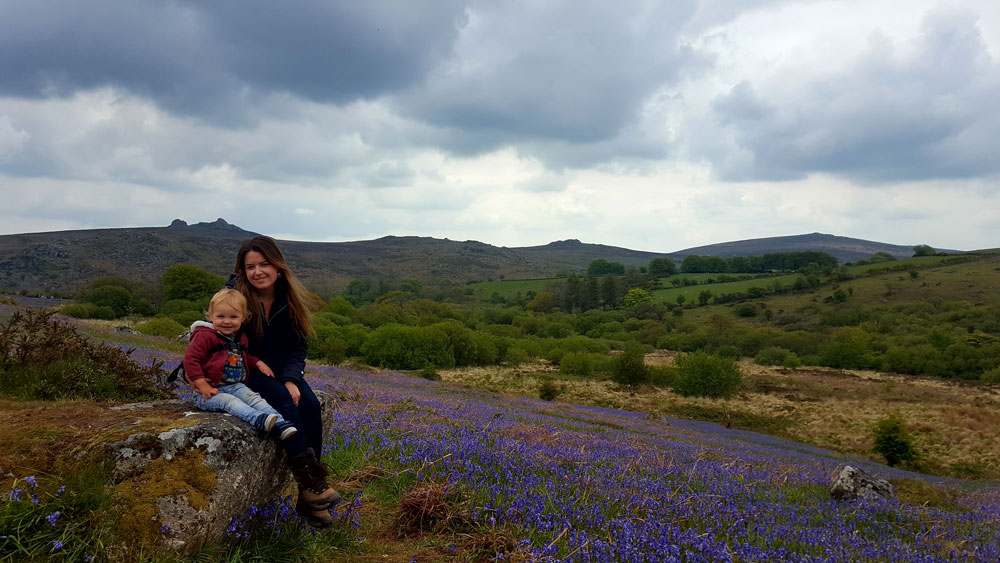
A few days on, now Saturday, and despite the cloudy skies it was a day on Dartmoor with Jess and Harry - another amazing day. Although the sun wasn't shining it was still bright and there was not a breathe of wind which is unusual. Our first stop was to Holwell Lawn near Hound Tor, a staggeringly beautiful spot especially at this time of year - and an ideal spot to snap your loved ones in...

Literally my favourite photo ever


Here there were singles of singing Garden Warbler and Cuckoo, along with a noisy recently fledged family of Stonechats.  After lunch in Widecombe we came back up the hill for my first ever visit to Emsworthy Mire, another beautiful spot...

Love the barn!


Not only was the view nice, but the soundscape matched it too.  A male Redstart was singing continuously in the trees pictured above, along with Wheatears, two Cuckoos and the amazing sound of two bubbling Curlews.

Stunning, and am already looking forward to my next visit.


Wednesday, 17 April 2019

Redstart Heralds Restart of Spring

Now we've seen the back of that blasting easterly wind, northbound migrant birds have responded accordingly.  

Unfortunately I wasn't able to make it out today, but Kev did ok up Beer Head as the fog cleared mid morning with Grasshopper Warbler, Redstart, Black Redstart and Whitethroat.  I did however cash in on some migrants yesterday, thanks to two visits to Seaton Marshes.

Visit one showed at least ten Willow Warbler and seven Blackcap in the bushes, with my first Reed and Sedge Warbler of the spring on the Borrow Pit.  The rain and low cloud kept 30+ Swallow and half a dozen or so House Martins low over the marsh...

Unfortunately yet again they weren't accompanied but a Red-rumped!


Visit two early afternoon revealed the cherry on top, a cracking male Redstart. It wasn't hanging around however, and within a few minutes had traveled the whole length of the ditch that runs west to east across the marsh just north of the Borrow Pit. I lost it when it flew into bushes next to the tram line.

And that brings this blog up to date for now, although considering the date I hope that by the day there will be more to tell.  To complete this post, although off patch, a visit to Lyme Regis the other day showed the immature drake Eider still present...

Wish it moved a little way west!


Sunday, 15 April 2018

First Redstart and Iceland Gull

Yesterday morning was a dull and misty one, often conditions we don't do that well in during migration time. Still I thought it was worth a wander around Seaton Marshes, so took little Harry out for an early morning walk...

Next month he'll be a year old, how did that happen!??


Although in general the bushes were quiet, a cracking highlight came in the form of a smart male Redstart in the north west corner of the Borrow Pit, our first of the year. And it really was a stunner. Many spring male Redstarts actually have quite restricted orange on their breasts, with a mostly white belly, I've always put these down as second-year birds. This one though was orange the whole way down the breast to the vent area, so presumably a full adult male.  Pity it didn't stay put for another ten seconds as I'd be able to post a photo of it if it had!  Half an hour later Phil and Ian Mc had a female Redstart here, and Kev had a third bird (another male) in Couchill Woods later in the day. Clearly something of a Redstart-day!

Otherwise all I saw in the bushes were four Chiffchaff and two Blackcap, but the skies above were busy with low flying hirundines, about 50, and they spent lots of time perched up on overhead wires...

All three species here

Can you spot the two House Martins among the Sand Martins?

A House Martin flanked by Sand Martins


Three White Wagtails at Cowhayne Lane during the afternoon was the only other highlight during the rest of the day.

Today the weather has been tasty, but sadly I've had such little time out - I reckon the sea would have been worth a watch, especially this evening.  I did just about manage a look along the Estuary mid afternoon, which showed there had been a decent influx of gulls. Not the Little Gull I was hoping for but 69 Common and a first-summer Med Gull were north of Coronation Corner, and among the large gulls was - hugely pleasingly - my first Iceland Gull of the year...

It was always pretty distant from my viewpoint

Always love a white-winger!


Despite the distance, I'm happy it's a second calendar-year bird, and to me it looked a fairly hefty and especially long-winged individual. I could see it wasn't the bird Tim Wright had on the Estuary at the start of the month, and when Ian Mc twitched it he was certain it wasn't any of the three Iceland Gulls that he's seen on the Axe this year (he has done really well for them!). So I'm happy it's a 'new bird'.

This Iceland Gull just proves that even if you only have the shortest window of time to go out birding, use it...

Wednesday, 19 April 2017

Redstart

Yesterday was not a good day for me. The south west coast of the UK saw an really impressive fall of migrants - with many places recording multiple Redstarts, Grasshopper Warblers, etc. Portland had a truly epic day. And it was a day that I didn't have much time to go out. I managed to give Seaton Marshes and the Boshill Cross area a good look, but they were both surprisingly quiet. With the clear skies the action was obviously on higher ground, Ian Mcs morning trip to Beer Head proved this with five Redstarts and a Pied Flycatcher. I so so wish I was able to give Axe Cliff a visit, but I wasn't. So I did the next best thing and went there this morning...

It started well with a singing Whitethroat being my first of the year - I recorded at least three by the end of my two hour walk.  And it was good to see the Lesser Whitethroat that I heard here last week still in situ, and showing quite well today.  A couple of Wheatears pitched in briefly before heading north, and I heard up to eight Willow Warblers singing from various spots.  Best of all though was this absolute beaut...


Oh yes. An absolute stonking male Redstart.  I often find spring Redstarts quite skittish and unsettled, but not this fella. He had found a warm and sunny corner of a field, and was showing off superbly - an absolute pleasure and joy to watch.  When I walked back half an hour later he was still there. 

I can confirm the best way to get over the disappointment of missing a good fall and a whole lot of potential, is to go out and watch one of these! I just need a 'Gropper' now to completely cure me.

Lastly, a few decent sightings and counts from my Dad last night at Black Hole Marsh included four Little Ringed Plovers, ten Dunlin, a few Ringed Plovers, and 12 Wheatear on Colyford Marsh. 

Friday, 26 August 2016

Beer Head Bird Binge

Very different weather conditions up Beer Head this morning, not a cloud in the sky and hardly a breath of wind. 

Pre-dawn looking east to Seaton Bay and Axe Cliff

A few hours later looking west


After yesterday's debacle I didn't even consider bird ringing this morning, I just packed my bins, camera and a breakfast bar and went for a wander - well I clocked up 4 miles actually!  The birding was so exciting, there's nothing better than being surrounded my migrant passerines at a beautiful location such as Beer Head, and in such nice weather too! I'm also desperate for a patch Ortolan and now's as good a time as any to try my hardest for one. 

A beautiful scene, but can you spot the Whinchat?


I was up here for four hours from 06:10 and noted; 

1 Egret sp. (this was so annoying. Rear end views of a large and deep wing-beating Egret heading NE overhead just after 9am - well aware how tricky it is judging size on lone white birds though so could do nothing more with it)
2 Skylark
2 Tree Pipit (over)
50+ Yellow Wagtail (c25 with sheep with more overhead)
40+ Wheatear
2 Whinchat
3 Stonechat (juvs)
4 Redstart (2m 2f)
2 Garden Warbler (one in Dell, one Branscombe slopes)
3 Blackcap
1 Lesser Whitethroat (stunning fresh juv in Sheepwalk, gutted it never popped back out for a pap. Oh and sorry Ian P!)
12 Whitethroat 
15 Willow Warbler
8 Chiffchaff
6 Spotted Flycatcher 

So, far fewer Tree Pipits than yesterday, but more of everything else. I had the feeling some of these birds were remainders from yesterday, for example two of the Spot Flies were with a female Redstart and flicking between the Sheepwalk and the Hollow, just like yesterday.

And here's a few more pics...

One of the Whinchats and it's shadow!

Juv Stonechat

Same again, a juv Stonechat

The colours on autumn male Wheatears are amazing. So much more than those beige juvs!

Spot Fly

Another Spot Fly

An elusive male Redstart - all of the four were buggers to get a good look at

Yellow Wags by their second most favoured choice of livestock!

Yellow Wag posing a bit better


Ok I think that's enough bird pictures for now.  Having a P900 makes it hard not to point and shoot and everything you see, however far away!

What was extra rewarding about this morning was the trek out to the upper slopes of Branscombe...

Short grass and plenty of bare ground and scrub


Almost every time I come out here and have a good look around, despite how yummy the habitat looks, I rarely see much at all.  That was different though today, and the area shown in the  photo above was home to ten Wheatear, four Whitethroat, two Redstart, two Blackcap, one Garden Warbler and a Spot Fly. It was just after I took this photo when I picked up the flying Egret, can't lie it did put a slight downer on things - I never like things getting away from me.

After Beer Head I gave the Estuary a couple of sweeps looking for big white things (whatever their bill shape!), failed on this but saw a lovely juv Marsh Harrier.  I would have said this was the bird Tim Wright saw a couple of days ago, but I don't think it was because this is the first Marsh Harrier I've ever seen here actually arriving - all the previous ones I've stumbled upon in the valley have already been over the marsh hunting.  I first clocked it thanks to an alarming Herring Gull behind me high above the hill above Axmouth.  It seemed to be drifting high west, but then dropped like a stone...

Marsh Harrier losing height!


And began to hunt over the marsh, with Crows in attendance as ever...

You can just about make out the pale fringes to the coverts, making this a juvenile


It's amazing to see how this species has increased here, in line with an increase and spread in breeding range across the UK. Ten years ago they weren't even annual, but this is probably our fifth of sixth individual of this year alone...

So all in all, a cracking morning, one that really got my juices flowing. But I must say it does feel like I am missing something.... Oh yes, now where's that Ortolan...
.