Pages

Showing posts with label tree pipit. Show all posts

Saturday, 7 September 2019

Mipits are Go

Managed to spend the first few hours of today on Axe Cliff, which was nice.  As I've not been able to get out much during the mornings so far this autumn, Axe Cliff has been frustratingly under watched - well not watched at all as far as I'm aware.  But still, better late than never...

Looking west.  I took this photo from the spot I did most the 'vis migging' from today.

I timed my first visit of the autumn here with the first big push of Meadow Pipits, a sure sign that we have moved into (what I call) the mid-autumn period.  Flock after flock were flying low west over the field pictured above, with many staying tight to the cliff edge.  Most flocks were in the 10-20 region, but there were a couple of 30's and one of c45.  I counted up until 8am and noted the following; 

360 Meadow Pipit
7 Tree Pipit
5 pipit sp. (flew like Tree's but remained frustratingly silent)
3 alba Wagtail
2 Chaffinch

Off they go! Mipits moving west with Beer Head in the background

Despite the passage overhead it was disappointing to see all the fields so empty - often on big Mipit days many of them land and feed here, but not today. In fact there weren't many grounded migrants about at all, just one Wheatear, two Whitethroats and eight Chiffchaffs noted.

On the way home I was going to stop off at Axmouth to see if the lingering Osprey was fishing - but there was literally no space! Fingers crossed we see it on the Birdwatch Special Tram tomorrow morning.

A busy Coronation Corner!


Tuesday, 21 May 2019

Dartmoor Double Dose

Thrilled to have spent a couple of days on Dartmoor within the last week. Reaffirming my feelings that this magical place is one of my favourite places on earth...

So picturesque


Last Wednesday was a very special day, as I took Dad up to the Moor for the first time since he suffered a stroke last October.  Thanks to the time I spent working on Moor Than Meets The Eye I feel like I know the Moor pretty well now, but I have to be honest and say I was really scratching my head thinking about where to find accessible birds. By accessible I mean birds easily viewable from a road or by a level and smooth path/track...there really isn't much of Dartmoor that can be described as being level and smooth! I soon learnt there was very little information online about where we could go, so hopefully this blog post will provide others in need with the relevant information.

I asked a few friends for their thoughts, and spoke to some land owners requesting a bit of extra access - and am delighted to say they were all super helpful and very obliging.  Basically it was only for permission to drive down a couple of private drives, but that increased level of access certainly helped make the day the success it was.

Looking down Headland Warren Valley to Challacombe Farm


We started the day by driving slowly down the valley of Headland Warren where Dad's first Wheatear of the year were easy, there were several pairs showing close to the road...

Male Wheatear
A different male Wheatear, this pair were clearly busy feeding young


 And right on cue, Dad spotted this right next to the car. Talk about 'easy' birding...

Cracking male Whinchat


I was a bit surprised that this proved our only Whinchat of the day, considering how densely packed in they are on the east facing slopes just across the valley from the road. The moderate and fairly cold easterly wind probably wasn't encouraging birds to sit out though, despite the blue skies.

At the base of the valley we arrived at Challacombe Farm, a site that always delivers. A good hour and a half here gave us two Cuckoo, three singing male Redstart, a couple of Lesser Redpoll, Reed Bunting, Whitethroat, Marsh Tits nesting in a wall and just plenty of birds. It's never a bad thing seeing lots of birds whatever the species, especially in this day and age.

Male Redstart
Same male Redstart
And again


A quick look in the Sousson's area gave us another singing Redstart and slightly more showy Cuckoo, along with a couple of Tree Pipits...

Distant singing Tree Pipit


After a quick stop in Postbridge and a check of the pines around the Bellever Forest car park (just a few Siskins here) we dropped down to Yarner Wood, our final destination of the day.  

First came lunch, then I managed to get Dad along the small track that runs from the top end of the car park along the back of the wet area in front of the hide.  We were told by a very helpful warden we were in the right place, and after some patience we saw two pairs of Pied Flies.  One of the males in particular showing especially well...

First-year male Pied Fly
And again
And again - what a poser!
Last one I promise! He was just so photogenic...


So there you go.  Accessible birding is possible on Dartmoor, it just needs a bit of forward thinking and planning. A truly memorable day for me, in so many ways.

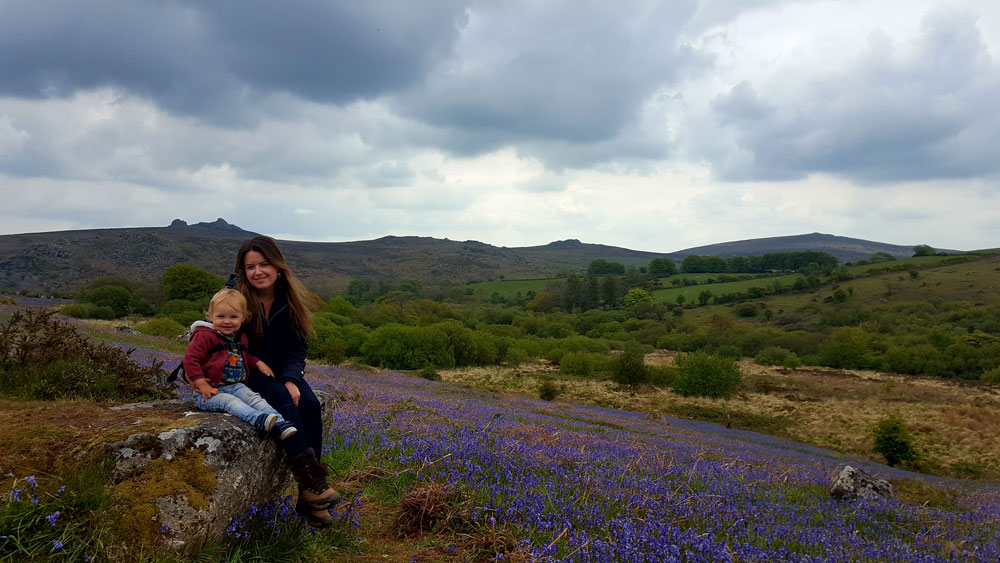
A few days on, now Saturday, and despite the cloudy skies it was a day on Dartmoor with Jess and Harry - another amazing day. Although the sun wasn't shining it was still bright and there was not a breathe of wind which is unusual. Our first stop was to Holwell Lawn near Hound Tor, a staggeringly beautiful spot especially at this time of year - and an ideal spot to snap your loved ones in...

Literally my favourite photo ever


Here there were singles of singing Garden Warbler and Cuckoo, along with a noisy recently fledged family of Stonechats.  After lunch in Widecombe we came back up the hill for my first ever visit to Emsworthy Mire, another beautiful spot...

Love the barn!


Not only was the view nice, but the soundscape matched it too.  A male Redstart was singing continuously in the trees pictured above, along with Wheatears, two Cuckoos and the amazing sound of two bubbling Curlews.

Stunning, and am already looking forward to my next visit.


Sunday, 26 August 2018

A Flavour of August

As can be guessed by my subdued social media and blogging presence of late, it's been a busy few weeks! August is one of my favourite birding months of the year, so with a window of opportunity to get out towards the end of the month, I took it...

The birders who've been getting out to Beer Head this month have been well rewarded, with good numbers of common migrants (including a few Pied Flies) and a bonus Wryneck found by Bun on Wednesday 22nd.  I knew Beer Head would be busy with birders on Saturday morning, and following a glimpse of some decent vis mig during a dog walk on the edge of Colyton on Friday morning (five Tree Pipits and six Yellow Wags flew west in a ten minute period), and the fact Saturday morning saw a cloud-less dawn, Axe Cliff lured me...

The view over Seaton from Axe Cliff


I was up here 06:00-08:15 and saw; 

44 Yellow Wagtail (all west, including two groups of ten)
7 Tree Pipit (all singles, west)
1 Wheatear
1 Redstart (a cracking male)
3 Whitethroat
5 Willow Warbler

So not loads of birds by a long way, but it filled me with so much joy. The joy of autumn birding.

After this I headed down to Black Hole Marsh, another venue that has done well this month, although unlike Beer Head hasn't offered any real patch scarcities. The second Spotted Redshank of the month (with a third found today!) had been found the day before, and showed well around the Island Hide whilst I was there. Exceptionally well...


As you can see it's a juvenile - and an incredibly fresh one at that! I don't think I've ever seen one so young, rewind just a few weeks and it was probably stumbling around a damp Arctic taiga landscape peeping at its mother for food!  Beautiful. Absolutely beautiful.

Also on view were a couple of juvenile Little Ringed Plovers, c25 Dunlin, a Green Sand and a Greenshank.

Won't keep you waiting as long for the next blog post I promise!

Monday, 28 August 2017

Yellow Wagtails Galore!

It's proving to be an absolutely stonking autumn for Yellow Wagtails. We always do well for them here in late August/early September, especially at Beer Head, but this year there are stacks more than usual. 

For the last few days up to 100 have been present in the valley (they can be found wherever there's cattle or on Black Hole Marsh) and most mornings Beer Head goers have been seeing upper double figures flying west. Plus this morning I added a load more with a visit to Axe Cliff, which I will happily write about now...

Beer Head has been pretty well covered so far this autumn by the usual gang; Ian Mc, Phil A, Bun, Clive W and Dad. This gang would usually include me, but this autumn I've decided to really concentrate on Axe Cliff which usually plays second fiddle, hence why Axe Cliff is within my Patchwork Challenge patch.  I went up there a few weeks ago but it was before the autumnal rush, and for the last week Harry has been suffering with a cold so our nights have not been too good (to say the least!). Thankfully though I finally made it up there this morning for a good walk about, albeit later than I would usually visit. An hour and a half from 08:30 produced;

6 Tree Pipit (two grounded, four west)
7 Meadow Pipit (grounded - my first of the autumn)
140+ Yellow Wagtail (all grounded in the stubble fields, I reckon I would have seen 200+ had I walked more fields)
1 Wheatear
3 Whinchat
1 Stonechat
3 Blackcap
2 Whitethroat
5 Willow Warbler

The bushes never do that well at Axe Cliff, but oh my word the stubble fields were amazing. I don't think I've ever seen Yellow Wagtails like it - they were everywhere!

This is what the Axe Cliff stubble fields are looking like at the moment

If you enlarge this photo, all the dots flying above the stubble are Yellow Wags!

Two Yellow Wags - they weren't easy to photograph as they spent most their time feeding in among the stalks

One of the Whinchats


Down in the valley, Black Hole Marsh is pretty samey wader wise but it's nice to have a juvenile male Ruff with us, which has been here since the afternoon of 23rd. There are a few more Snipe (11) and Teal (25+) about as well, and I'm sure a scarcity or rarity is only a matter of days away.

Which leaves me just to say goodnight...

Tonight about twenty minutes after sunset on the lower Axe Estuary looking towards Seaton

Saturday, 15 April 2017

Hare, There and Everywhere. But Few Birds...

The weather conditions were absolutely perfect for a spring fall this morning, with a north west wind and really nice thick covering of cloud. There was even a little bit of drizzle not long after dawn!

It started quite well with an early visit to Black Hole Marsh showing that overnight two Reed Warblers had dropped in, with both singing from the strip of reeds up to the Tower Hide. I just love migration, not there one day, singing in full voice the next!  

I then headed up for a good stomp around Axe Cliff, which started off well with a single Tree Pipit over north soon after my arrival. Not a common spring migrant so great to get one on my Patchwork Challenge list so soon.  This was however a false start, with little else passing over and the bushes being incredible quiet migrant-wise.  A singing male Lesser Whitethroat towards the end of my walk did somewhat make up for all the fruitless trudging around mind - another decent year tick. But what really made the walk worthwhile was this wonderful Hare...


I have missed a couple of good birds today. One was a Spoonbill that Phil had briefly drop onto Black Hole Marsh at 1pm, which interestingly looks to be the same Spoonbill that was on Bowling Green Marsh up until 11:30 today.  But more gripping year listing-wise was a Grasshopper Warbler heard reeling for twenty minutes on Colyford Common by a visiting birder mid morning.

I did try tonight for the 'Gropper' in case it started up again at dusk, which they can sometimes do if they haven't moved on, but my plan didn't work out.  It wasn't a wasted trip though as I got to see Goosanders again, with three circling over Black Hole Marsh before dropping onto the Estuary at 20:05...

A drake and two female Goosanders


In my last post I was wrong to presume the lone Cattle Egret that I've been seeing for a couple of days, and the lack of any Cattle Egrets in the Borrow Pit at dawn, meant we were down to just one bird. Twilight Tim has seen seven over the past two days, which actually makes me wonder if the lone bird was bird number seven, which has now joined up with the regular six?

So to summarise today, an okay day but considering the date and the weather it should have been much better. Sometimes I really do wish our patch was somewhere else in the south west, at a real migration hot spot like Lands End, Portland or Charmouth...

Thursday, 30 March 2017

Early Tree Pipit

Today started promising, Black Hole Marsh first thing suggested there had been an arrival of warblers, with three Willow Warblers and two Blackcaps.  This didn't seem to be the case though with other sites showing very little.  In fact after this warbler flurry all I saw of note in the valley today were a House Martin, ten Sand Martins and the lingering Knot and Pintails.

There was surprise for me whilst walking the dog at Bovey Down though mid morning (sadly outside my PWC patch).  Last March I published a post about what I felt were the top five misidentified early spring migrants, you can read it again HERE. But in brief, Ospreys that are white Buzzards, calling Cuckoos that are actually Collared Doves, Willow Warblers that are bright Chiffchaffs, etc. Third on my list was Tree Pipit.... and guess what I saw today - a Tree Pipit!!

I picked it up on call, so never any doubt to the ID.  I heard it call three times before I even saw it, and then I watched it fly low west over the common before it seemed to drop down at the far west end of Bovey Down.  They have bred here in recent years so it may be a returning breeding bird, or possibly just a passing migrant. Wherever it's heading it's my earliest ever in the UK that's for sure.

It's gone lovely and mild out there today, with a nice southerly wind blowing, so the next few days could be interesting... or just frustratingly quiet with nice birds turning up elsewhere. Hopefully it's the former!

Wednesday, 14 September 2016

Autumn Returns

You may have picked up on some frustration in my recent blog posts that despite daily visits, Black Hole Marsh has remained very samey - except for the lovely juv Sanderling on Friday 9th that is.  

Thankfully though, yesterdays frequent thunder storms and heavy rain showers seem to have got things moving again.  A flying visit mid afternoon yesterday showed a nice due of Curlew Sandpiper and Ruff new in... 

Juv-1w Curlew Sandpiper


I was back down there for dawn today, and saw;

1 Avocet
6 Ringed Plover
22+ Dunlin
1 Curlew Sandpiper
1 Knot (juv)
14 Black-tailed Godwit
6 Bar-tailed Godwit
2 Ruff
3 Common Sandpiper
1 Green Sandpiper
2 Snipe

Out of that list the Avocet is the stand out bird.  Although they are annual on the Axe, this is the first that I've ever seen on Black Hole Marsh. I'm also pretty sure this is our first of 2016 following a blank spring.  I didn't have time to walk to the Tower Hide so you will have to make do with an ultra distant record shot...

Good job Avocets aren't little brown things!


The second Ruff and the Knot were also new arrivals, as was a second Knot on the Estuary about half an hour later.  

It's not just been a wader day, seems to have been a good one for passerines too.  Colyford Common mid morning showed six Wheatear and two Whinchat...

Love autumn Whinchats!

Whinchat on the baordwalk

A Wheatear and Ruby Red Cattle


A late morning visit to Axe Cliff was also fairly rewarding, despite the heat and the time of day. 

What a view!


10:45-12:10 here produced;

1 Golden Plover
12 Wheatear
7 Whinchat
50+ Meadow Pipit
1 Tree Pipit
1 Sedge Warbler
3 Whitethroat
1 Willow Warbler
3 Chiffchaff
90 Linnet

The Golden Plover was my first of the autumn, and flew over west. Thankfully I picked it up on call so didn't need to worry about the Lesser varieties. The Whinchat count was decent (a five and a two) and the Tree Pipit I flushed out of long grass.

I'm not sure if it is good to see so many Meadow Pipits. When they replace Yellow Wagtail as the most frequent fly over migrant you know you've moved into the next phase of autumn migration. I've been hearing them going over fairly often now for the past three of four days, and have only had one Yellow Wag. Autumn rolls on...


Monday, 29 August 2016

Tree Pipit Triumph

I'd describe myself as a pretty dedicated patch birder. Sure it helps to have such a great patch, but I do love patch birding in general. One of the things I most like about it is how relatively common, sometimes even nationally VERY common birds can become so much more.  I have read many times of birds like Coots, Mute Swans, and my god even Canada Geese making someones morning by appearing out of the blue on their patch. How brilliant is that! Patch birding can add a new dimension to birding which otherwise simply wouldn't be there.

One persons dross is another persons mega!


The main problem with the Axe patch is it is so bloody big! We calculated the boundary by drawing a circle with a radius of 5km from the lower road bridge over the River Axe (Harbour Road, Seaton). Yes we only have ourselves to blame for it being so big, but we wanted to include all our key sites like Beer Head, Axe Cliff, Bovey Down, Branscombe, etc.  Having a patch this big makes deciding where to go often very hard, but also it makes finding rares so much more challenging. There must be thousands of private gardens within our patch, who knows how many Wrynecks and Hoopoes annually hunker down in these? There's acres of woodlands, and even more open farmland with hedges and scrub.  I think this is the main reason why none of us have ever seen a Shrike here. One could drop in anywhere and if it doesn't happen to be at one of the places we check, then we just wouldn't know it was ever there...

It's because of this that I always make a point of checking areas away from the regularly birded haunts.  And there's one small patch of scrub and rough grassland in Seaton that I check many times over the course of spring and autumn - it just looks so good for a Shrike or a Wryneck. So far, no Shrikes or Wrynecks, but I have had a modest selection of commoner migrants up here over the years.  And last Thursday afternoon, I added a new species to this micro-patch, when two Tree Pipits flushed up from the grass in front of me...

They clearly didn't get on with each other! Notice the short hind claws

This one had quite a striking ear covert spot cf. Olive-backed Pipit.


Although I had seen 16 Tree Pipits earlier that day on Beer Head, these two meant so much more. I knew I was going to see Tree Pipits on Beer Head even before I stepped out of my car, but I really was not expecting these. Yes I know they are relatively common migrants, but it really feels like they have rewarded my efforts, and they have certainly fired me up to visit this site a bit more often now. Hopefully next week it will be the turn of a Shrike or a Wryneck...

Lastly, I just want to thank you for all the comments I've had (via twitter, email, the blog) about my last blog post. And it seems that not only am I inspiring people to get out birding, but also other bloggers to write.

Oh and by the way, so far Photo B is way in the lead, but I will wait until the vote closes before announcing the winner.

Thursday, 25 August 2016

Mega Beer Head Morning

Mixed emotions from Beer Head this morning. One of my best ever early autumn falls, but I was bird ringing and managed to catch not that much at all!!  I knew it was going to be good straight away, as I was walking out to my net site in the half-light of dawn I saw a Spot Fly on a low fence with half a dozen Wheatear, and two Tree Pipits flew over calling.

The first two hours were really amazing, with birds just suddenly appearing in the bushes, but then quickly disappearing too.  The field I was ringing in was then completely invaded with Wheatears when a huge flock dropped in, but again they pretty quickly moved off west. Yellow and Grey Wags and Tree Pipits kept zipping overhead, it really was all go and so so exciting!!! At about 9am though it all went quiet. And I mean really quiet, the bushes just went bird-less. So weird how this happens...

But my one 60 foot mist net that usually catches most things I see was completely and utterly useless.  The north wind was just strong enough that birds could clearly see it as they were flying around, under and over it.  It may as well have been painted neon yellow to be honest - well it couldn't have done any worse! So so disappointing in this respect (especially as I saw the star bird of the morning 'bounce out'), but a superb few hours at the same time!

Pointless mist net!


So, forgetting about the ringing (which is what I should have done at 7am and just gone for a wander!) this is what I saw;

1 alba Wagtail
3 Grey Wagtail
30+ Yellow Wagtail (some with cattle, others over west)
15 Tree Pipit (my highest ever count for Beer Head, all overhead)
25+ Wheatear
2 Redstart (m and f)
1 Pied Flycatcher (a bit of a Beer Head mega, last seen bouncing out then flying around my mist net! Gutting)
5 Spotted Flycatcher
1 Blackcap
1 Garden Warbler
4 Whitethroat
10 Willow Warbler
5 Chiffchaff
1 Goldcrest (my first of the autumn here)

Ian Mc, Ian P and my Dad were also up Beer Head this morning, and from what they told me I reckon you could add another one or two Redstarts, a couple more Spot Flies and a load more Whitethroats to my totals.

Epic epic epic morning. Really hope we get many more like this, but it would be nice if I caught a few of them next time...

Monday, 14 March 2016

The Top Five Stringy Spring Species

One of the least enjoyable aspects of being County Recorder is telling people they've made a mistake.  To be honest 95% of people take it very well and just accept they've come to the wrong conclusion, but there is that 5% that aren't quite so accepting.  They openly admit they are not experienced bird watchers, but will not accept they are wrong - I'm sure this says more about their personality than anything else, but please, Google is not always right!  

Early spring is an exciting time of year, and optimism is in the air. Sadly though this seems to tip some over the edge, and I can categorically say that February and March are the two worst offending months for inaccurate bird records. As a bit of fun I thought I'd put together my top five of the most frequently wrongly reported species...

5/ Yellow Wagtail. To be honest this is an all winter problem, which I blame mostly on the fact that Grey Wagtail is a bit of a misnomer.


4/ Willow Warbler.  From late Feb through to mid March way more Willow Warblers are reported than would be expected, and the ID features mentioned (if any) are 'looked really green' or 'had pale legs' and never the longer primary projection, whiter belly or longer bill.


3/ Tree Pipit.  It's simply amazing how many Tree Pipits are on territory and displaying from mid February. I mean, what else would a parachuting Pipit launching itself off a small heathland tree be? This is a mistake made even by fairly experienced birders.


2/ Osprey.  The difficult one with Ospreys is that they can arrive very early, as early as Sand Martins and Wheatears. But reports of Ospreys sitting in the middle of fields, or on road side telegraph poles does make sifting the 'iffy' ones out fairly easy.


1/ Cuckoo. This is always a non-birder's mistake, and no doubt mostly down to the fact that people just don't hear Cuckoos any more.  It is surprising just how many February and March Cuckoos get reported, only ever heard and only ever by non-birders.


Now to help make this post more of a constructive and informative one, let's do 5-1 again...

5/ Yellow Wagtail. This species is very rare in the UK out of April-October, although the last few days of March could see the first few arrive. As you can see from the below photo they really are yellow (the males anyway) and are a bird of open marshes and open fields, they particularly love feeding around cattle. This is quite unlike Grey Wagtail, which are much longer-tailed and are most often found on fast flowing streams or around large ponds.


4/ Willow Warbler.  Here's a pic I took in 2014 showing a Willow Warbler on the left and a Chiffchaff on the right. Chiffchaffs can look very yellow and show pale legs, but the face of a Willow Warbler is pretty striking, as are the paler underparts.


3/ Tree Pipit.  First and foremost, Meadow Pipits do perch on trees, they sing from trees and even parachute off trees during song flights.  You really have to hear a Tree Pipit's song to realise how much more varied it is than a Meadow Pipit's, but also listen out for the buzzing call of Tree Pipit.  When perched up, note how little streaking the Tree Pipit below shows on its flanks...


2/ Osprey.  To be honest there isn't much to say when it comes to pale Buzzard v Osprey, just take a look at the below photo. They are so much longer and overall bigger with a very distinctive head pattern...


1/ Cuckoo.  Well this is an audible one so a picture won't help, but the 'Cuc' in the Cuckoo is on another level - so strong and gutsy and puts the 'koo' to shame. Also bear in mind that Collared Doves don't always sing three notes, sometimes it is just two, but they do always sound like a dove (soft and coo-ey).


Yes it may be true that I have become far more cynical now, but in reality you have to be if you are vetting bird records.  But it is SO important to also keep in mind than anything can happen and nothing really is impossible. Thankfully it usually is pretty easy turfing out the inaccurate records, but I would challenge anyone who says they could get it 100% right.